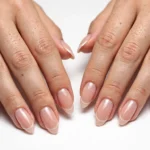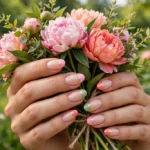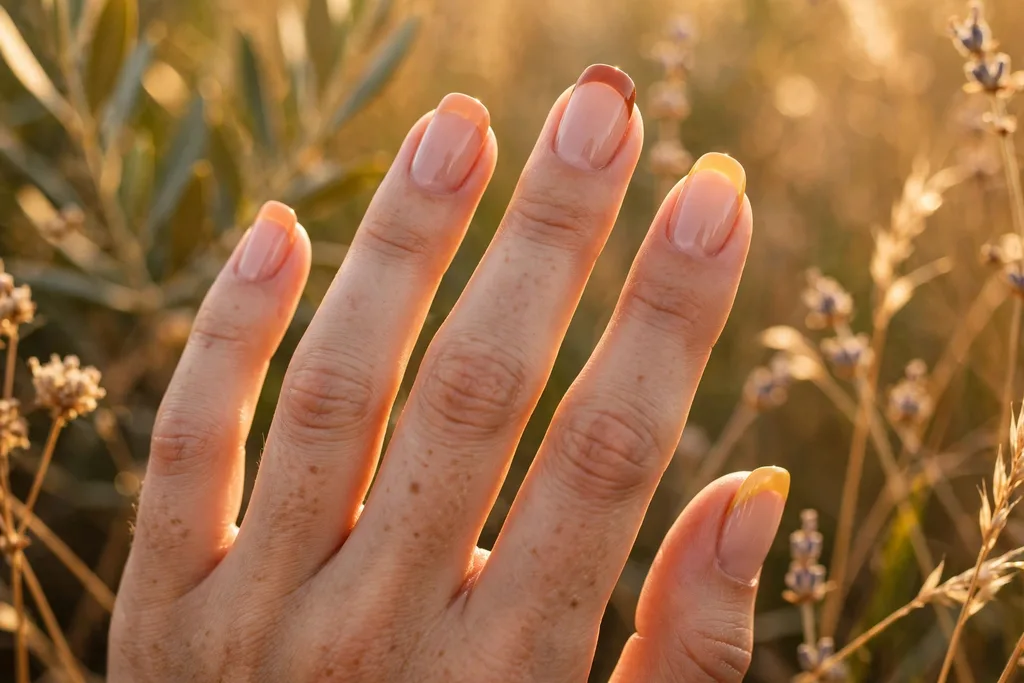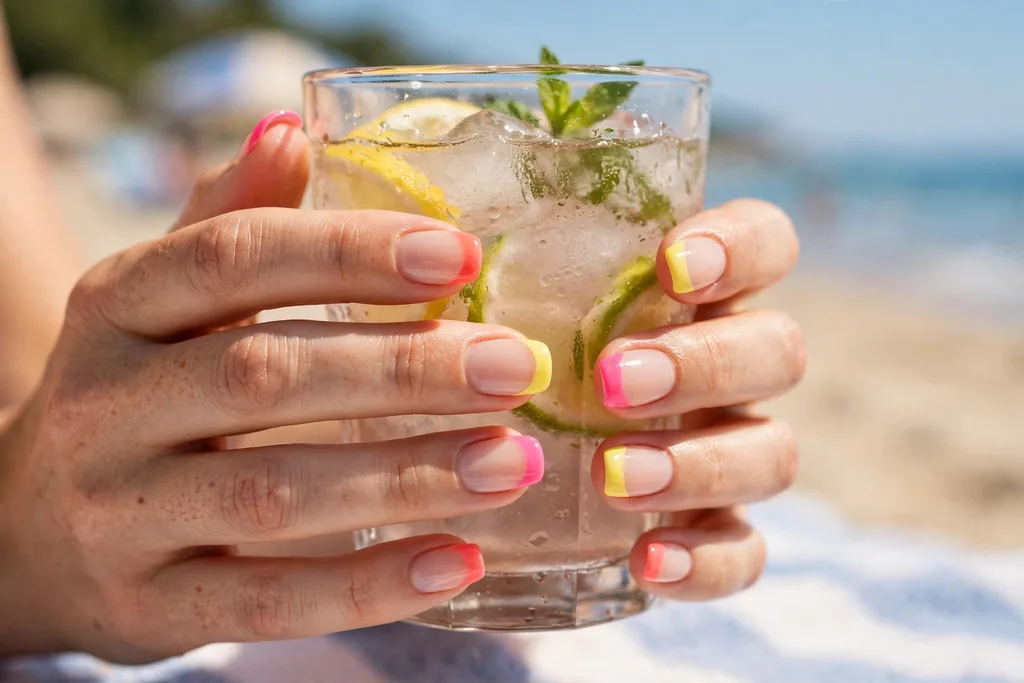
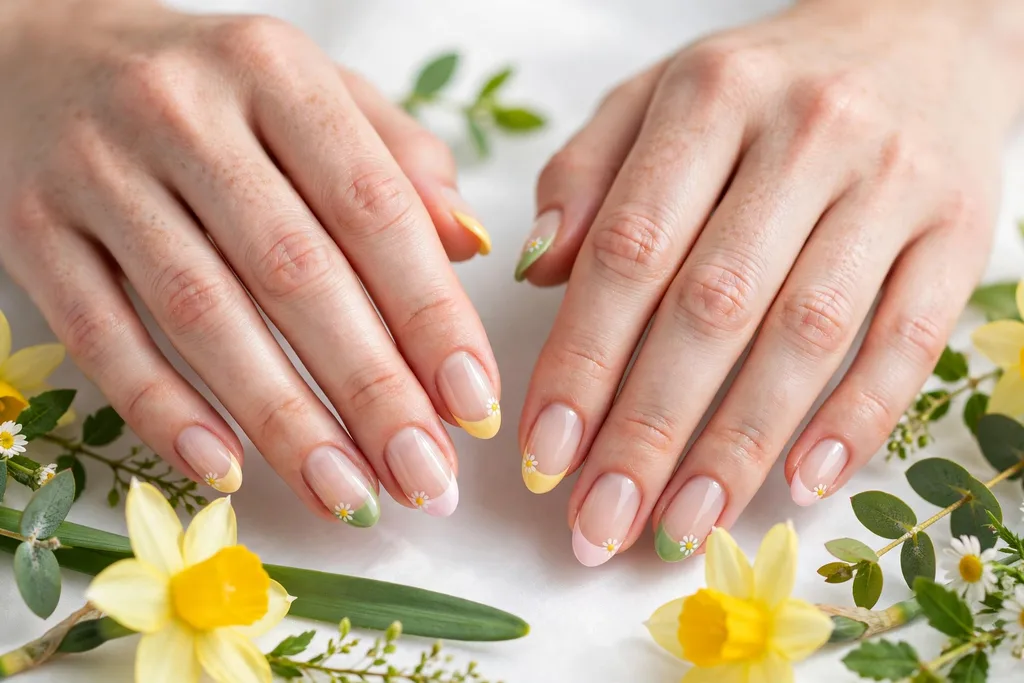
Early spring French tip nails are the season’s fresh start in manicure form: the clean structure of a classic French — a sheer, natural base with the color kept at the tips — in the palest shades of March. Think daffodil yellow, new-leaf green, barely-there pink, and soft lilac, worn clean and minimal while the garden is still waking up.
This is the winter-to-spring transition edit, not the full spring palette. As the last of our Winter French Tip Nail Designs give way to lighter days, these 20 designs keep everything soft, bright, and simple — the first flowers of the year, translated into tips.
Quick Picks: Early Spring French Tips at a Glance
Short on time? These six cover the first weeks of spring:
| Design | Tip color | Best shape | Difficulty | Best for |
|---|---|---|---|---|
| 1. Daffodil Yellow French Tips | Daffodil yellow | Medium almond | Easy | The first-spring statement |
| 2. New Leaf Green French Tips | New-leaf green | Medium almond | Easy | The signature early spring shade |
| 3. Palest Pink French Tips | Palest blush pink | Medium oval | Easy | Most wearable everyday look |
| 8. Mint Fresh French Tips | Pale mint green | Short squoval | Easy | Best for short nails |
| 7. Tiny Daisy French Tips | White with daisy accents | Medium almond | Medium | The first flowers of the year |
| 12. Five Shades of Early Spring French Tips | Five spring pastels | Medium almond | Easy | The whole palette at once |
20 Early Spring French Tip Nail Designs
1. Daffodil Yellow French Tips
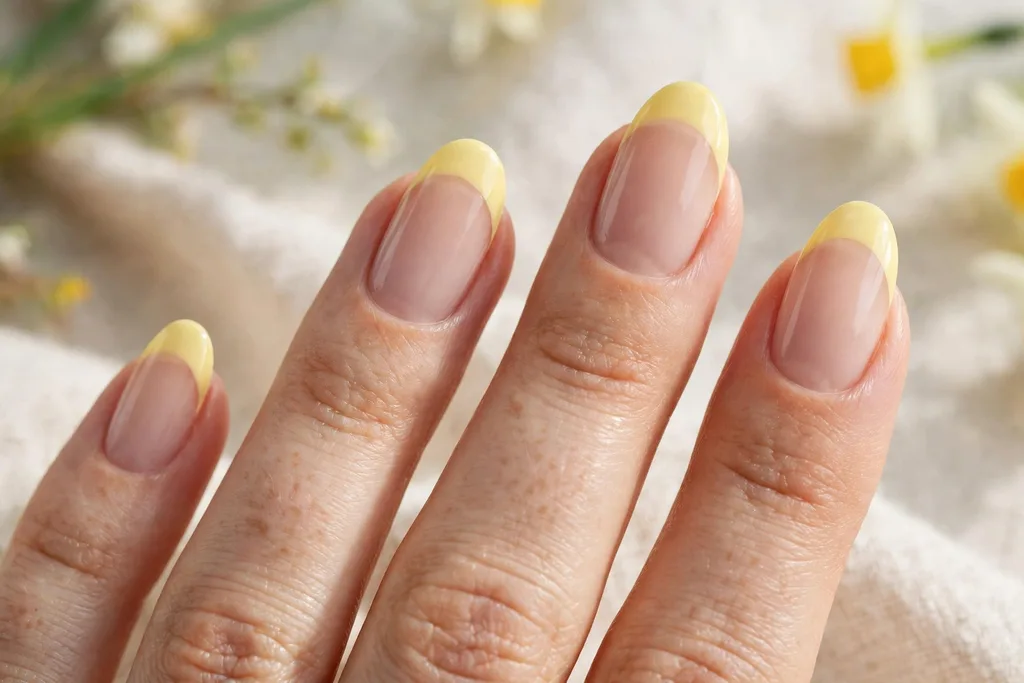
Base color: Sheer nude. Tip color: Daffodil yellow. Shape/length: Medium almond. Finish: Glossy. Difficulty: Easy. Best for: The first-spring statement shade.
Daffodils are among the very first flowers to open, and their soft yellow is early spring’s happiest color. Keep it pastel rather than neon so it reads fresh, not summery. Yellows can streak, so use two or three thin coats and let each one dry before the next.
2. New Leaf Green French Tips
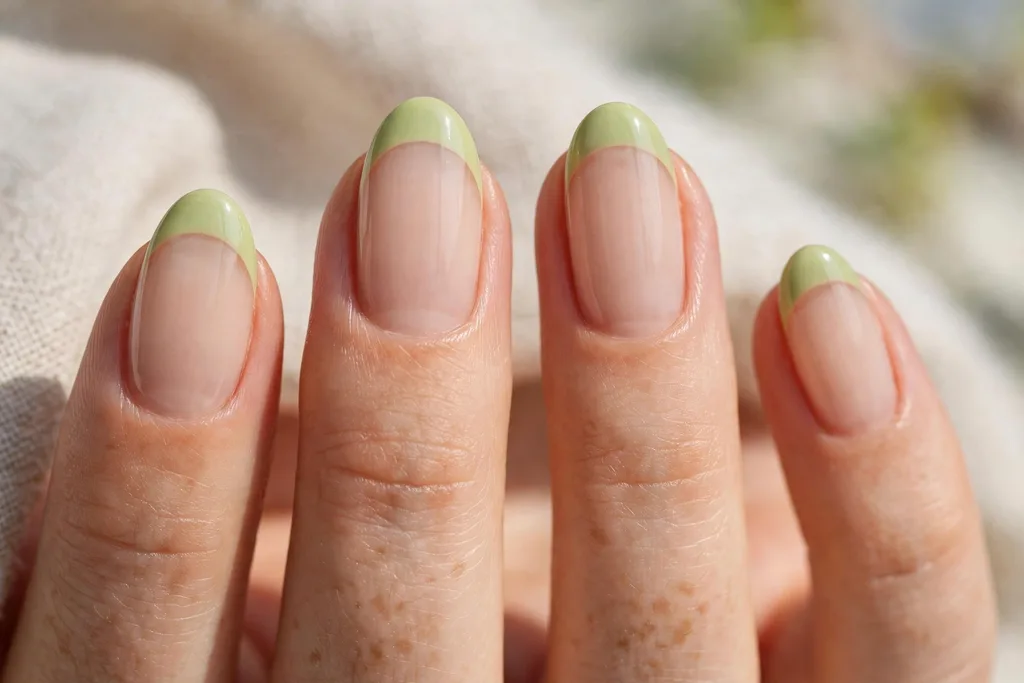
Base color: Sheer nude. Tip color: Fresh new-leaf green. Shape/length: Medium almond. Finish: Glossy. Difficulty: Easy. Best for: The signature early spring shade.
New leaves come out a bright, yellow-leaning green before they deepen, and that shade makes a French tip feel freshly grown. It pairs with white, cream, and denim, and gloss keeps it dewy rather than flat.
3. Palest Pink French Tips
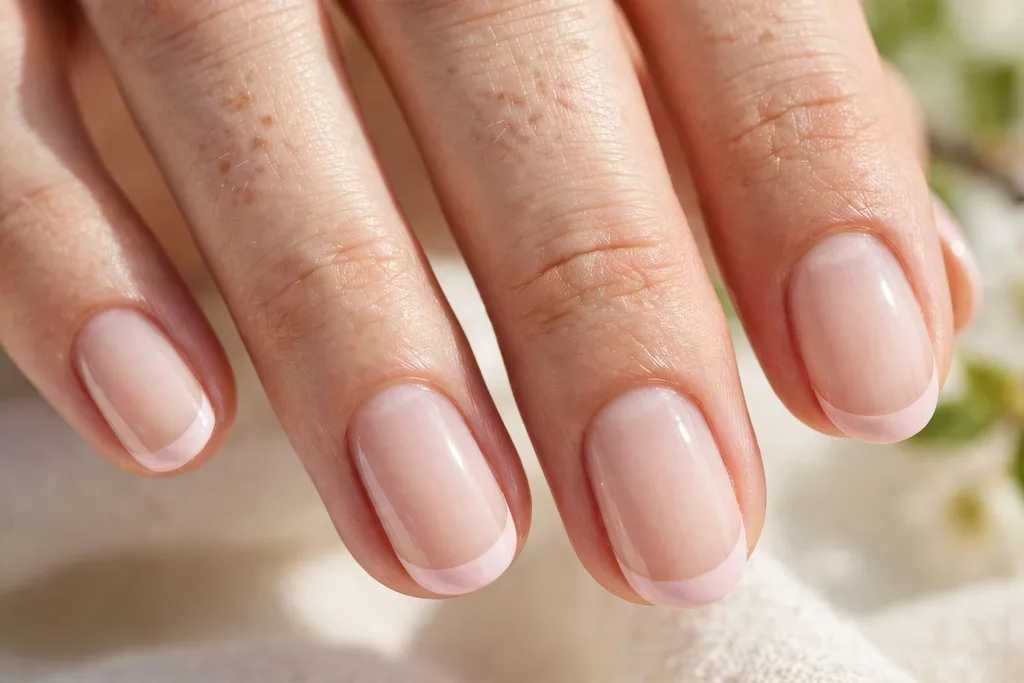
Base color: Sheer nude. Tip color: Palest blush pink. Shape/length: Medium oval or almond. Finish: Glossy. Difficulty: Easy. Best for: A barely-there everyday refresh.
The palest pink tip is the quietest way to mark the season change: just enough color to look new, with low contrast so grow-out stays discreet for over a week. Two thin coats keep the shade even and milky rather than patchy.
4. Lilac Mist French Tips
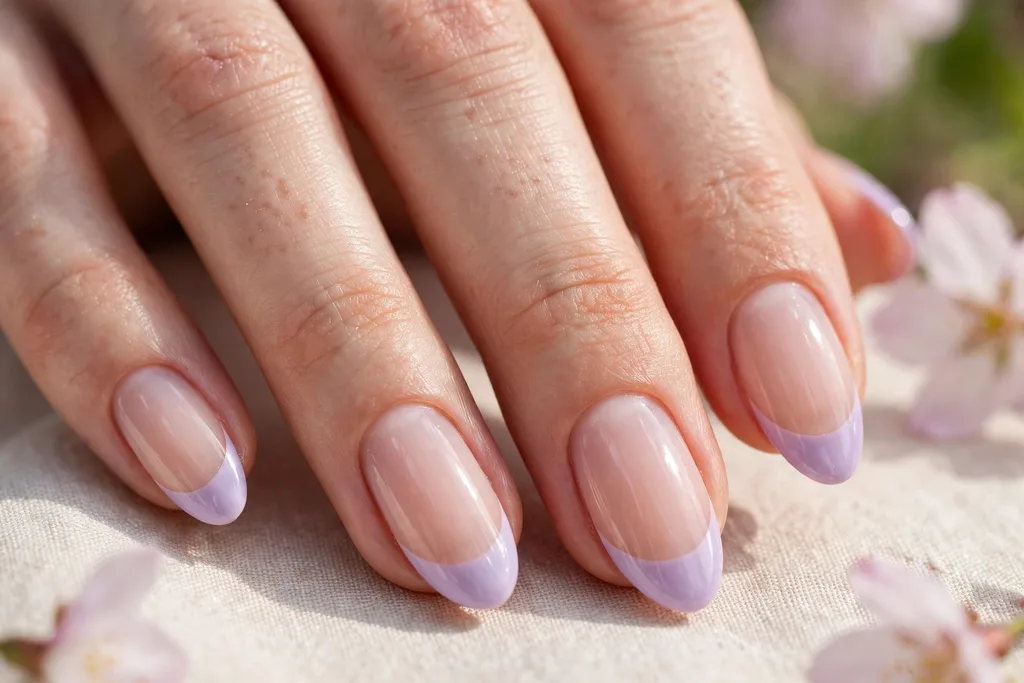
Base color: Sheer nude. Tip color: Soft lilac. Shape/length: Medium almond. Finish: Glossy. Difficulty: Easy. Best for: Cool-toned spring outfits.
Lilac sits between pink and purple, borrowed from the earliest spring shrubs. It photographs well in bright March daylight and suits silver jewelry. Pale purples look uneven if rushed, so float the brush and keep coats thin.
5. Sky Wash Blue French Tips
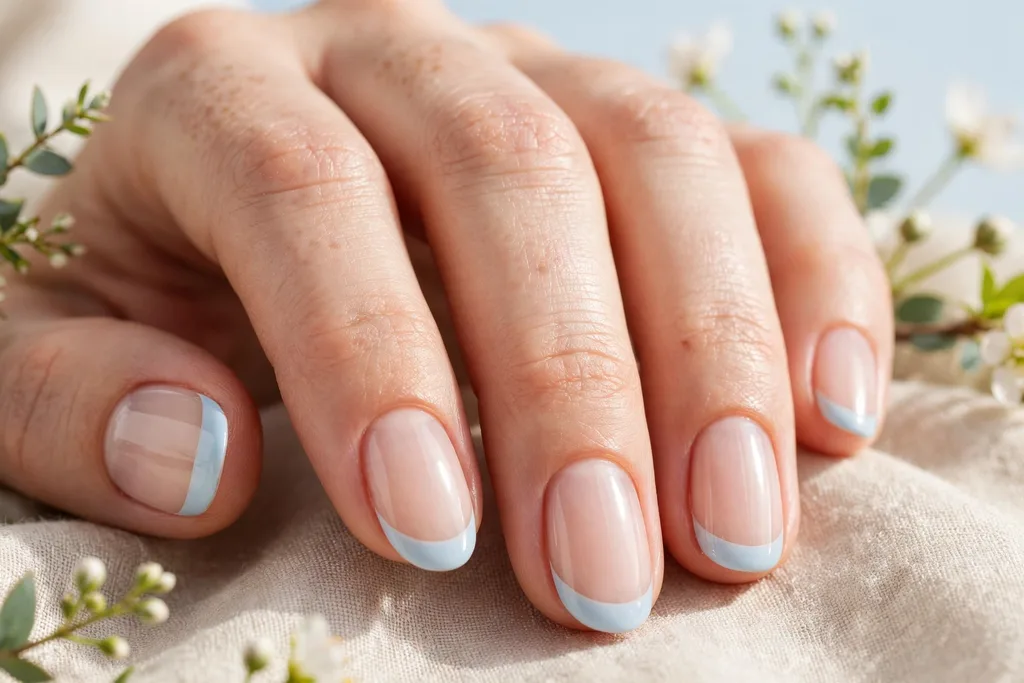
Base color: Sheer nude. Tip color: Palest sky blue. Shape/length: Medium oval or almond. Finish: Glossy. Difficulty: Easy. Best for: A clean, airy look.
A wash of pale blue is the color of a clear morning after weeks of grey skies. It reads almost neutral from a distance and shows its freshness up close. Tidy the smile line before sealing, since pale shades show wobbles.
6. Peach Blossom French Tips
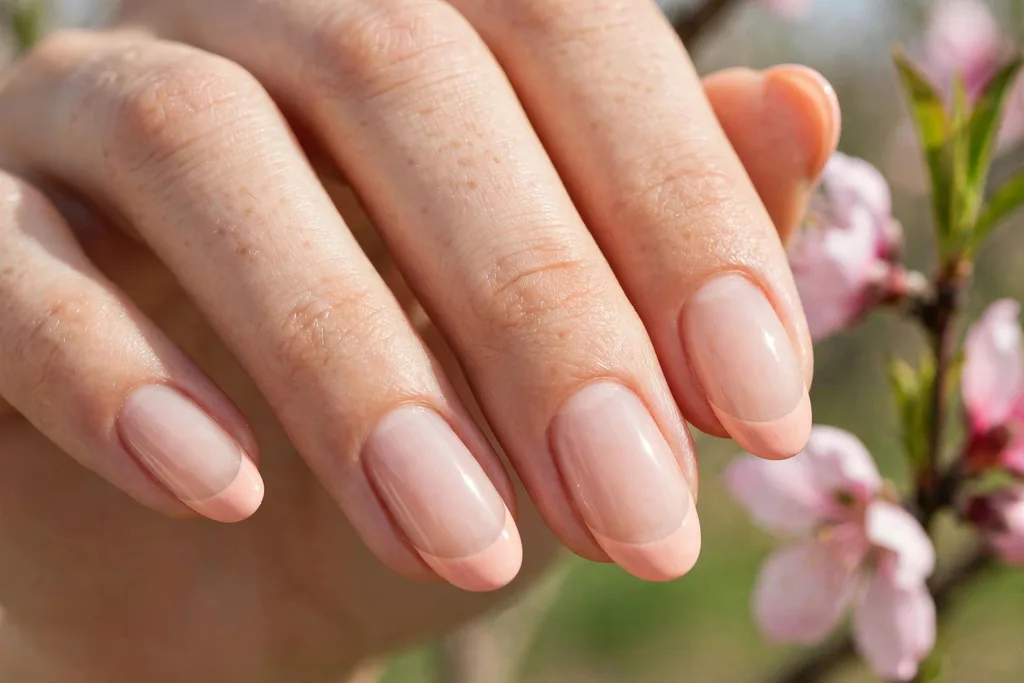
Base color: Sheer nude. Tip color: Soft peach. Shape/length: Medium almond. Finish: Glossy. Difficulty: Easy. Best for: Warm skin tones and soft palettes.
Peach blossom is the warm pastel of the set: softer than coral, brighter than nude, and kind to warm skin tones beside gold jewelry and cream knits. Its gentle contrast also keeps the manicure tidy as it grows out.
7. Tiny Daisy French Tips
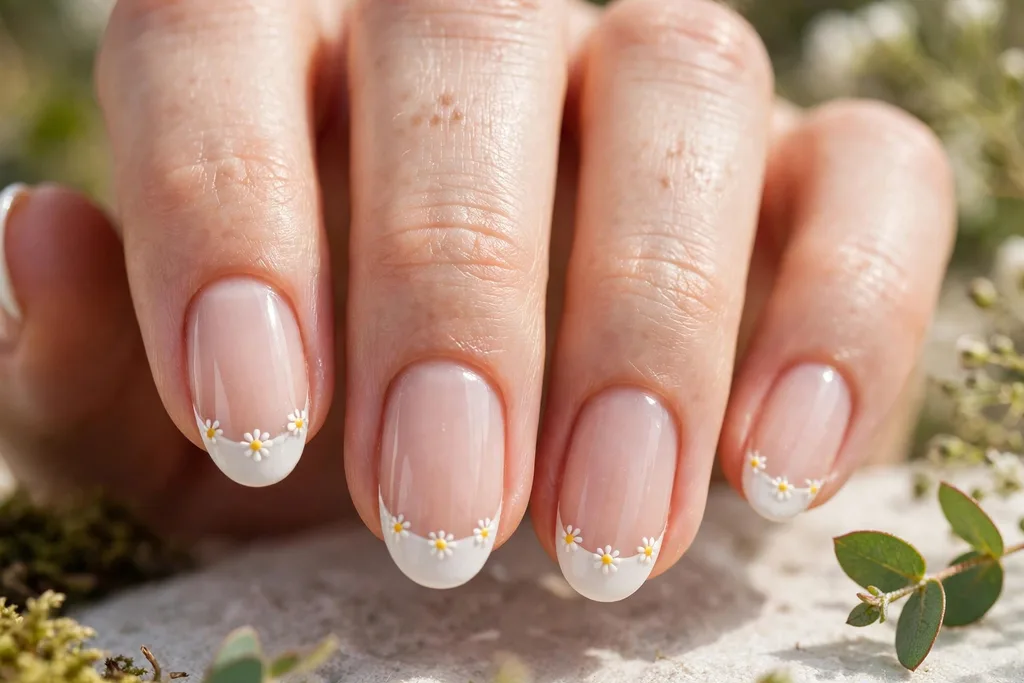
Base color: Sheer nude. Tip color: Soft white with tiny daisy accents. Shape/length: Medium almond. Finish: Glossy with dot detail. Difficulty: Medium. Best for: The first flowers of the year.
Daisies are among the first lawn flowers of the year, and a row of tiny ones along the smile line is early spring’s sweetest detail. Dot five white petals around a yellow center with a dotting tool, on two or three nails per hand, and seal well.
8. Mint Fresh French Tips
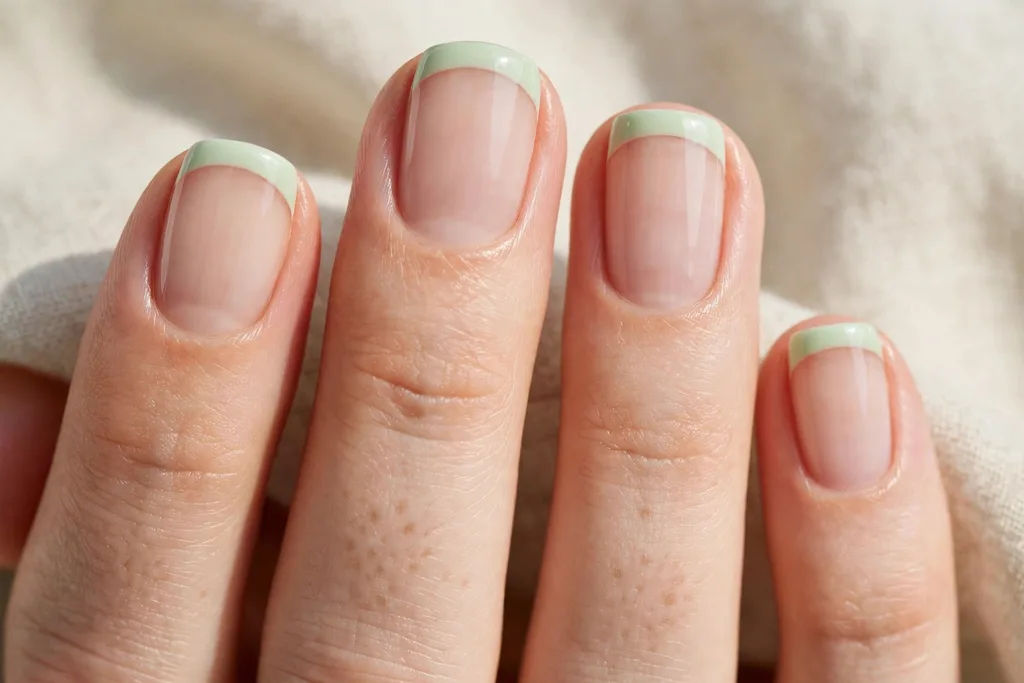
Base color: Sheer nude. Tip color: Pale mint green. Shape/length: Short squoval or medium almond. Finish: Glossy. Difficulty: Easy. Best for: Short nails and a clean reset.
Mint is the freshest green here — cooler and paler than new-leaf green, and especially good on short nails, where a slim tip band brightens without overwhelming. A glossy top coat keeps the shade creamy rather than chalky.
9. Pearl White French Tips
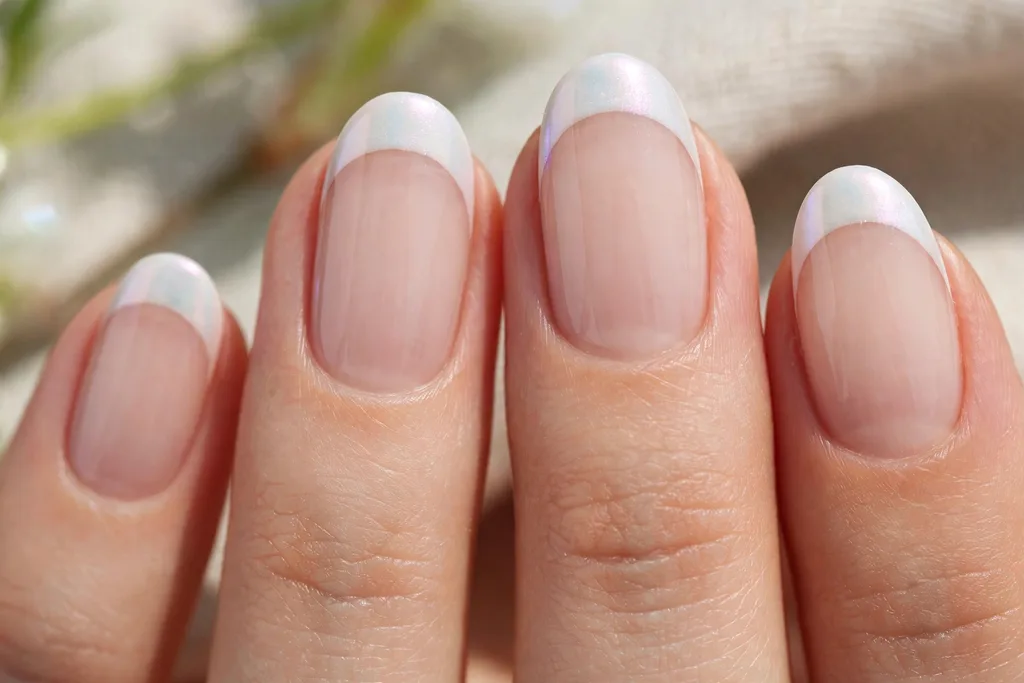
Base color: Sheer nude. Tip color: Pearl white. Shape/length: Medium oval. Finish: Pearlescent sheen. Difficulty: Easy. Best for: The dressiest early spring finish.
Pearl white tips shift softly between white, pink, and cream as your hands move — a luminous option for early spring lunches and photos. Pearlescent polishes show brush strokes, so apply thin coats and let the sheen do the decorating.
10. Buttercream Yellow French Tips
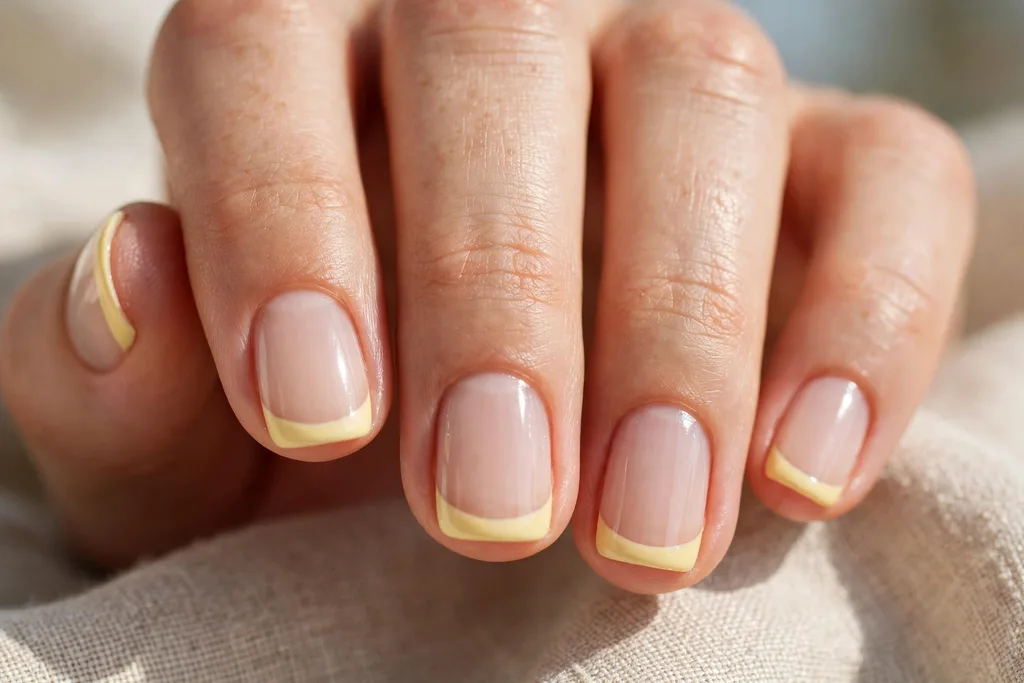
Base color: Sheer nude. Tip color: Buttercream yellow. Shape/length: Short squoval or medium almond. Finish: Glossy. Difficulty: Easy. Best for: A softer take on daffodil yellow.
Buttercream is daffodil’s paler sister — a creamy, milky yellow that feels like morning light. It suits shorter lengths and softer outfits, and low contrast hides minor chips and grow-out.
11. Cherry Blossom French Tips
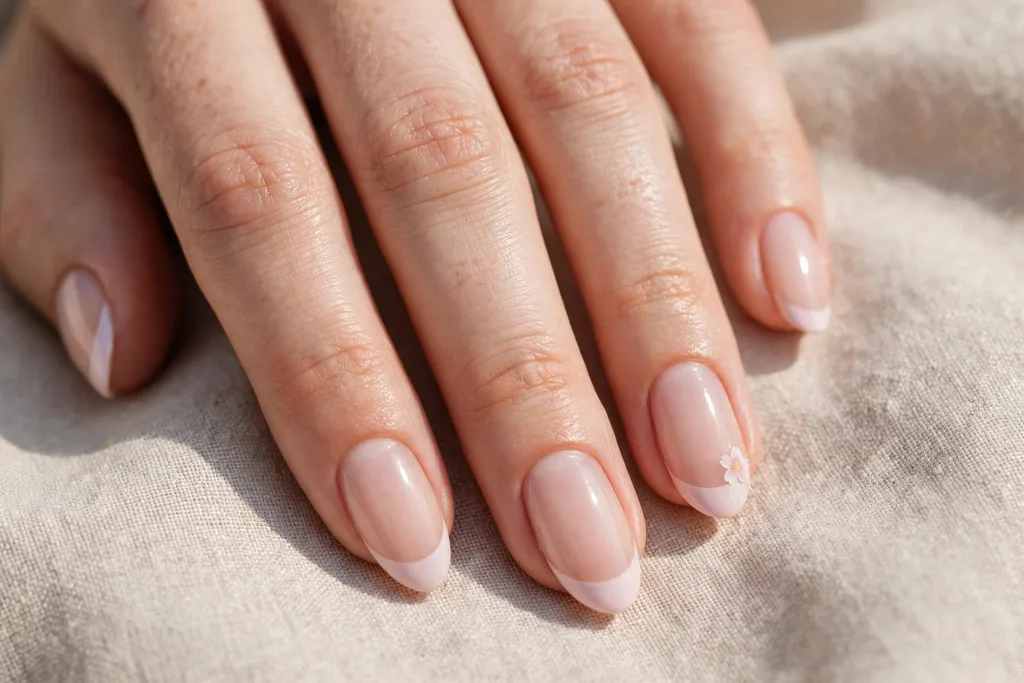
Base color: Sheer nude. Tip color: Pale pink with tiny cherry blossom accents. Shape/length: Medium almond. Finish: Glossy with floral accent. Difficulty: Medium. Best for: Blossom season photos.
Cherry blossom season is early spring’s brief headline act. Pale pink tips carry one small blossom cluster on each ring finger — five-petal dots in a deeper pink, painted last with a toothpick. Practice on paper first; keep the other nails plain so the blossoms stay the story.
12. Five Shades of Early Spring French Tips
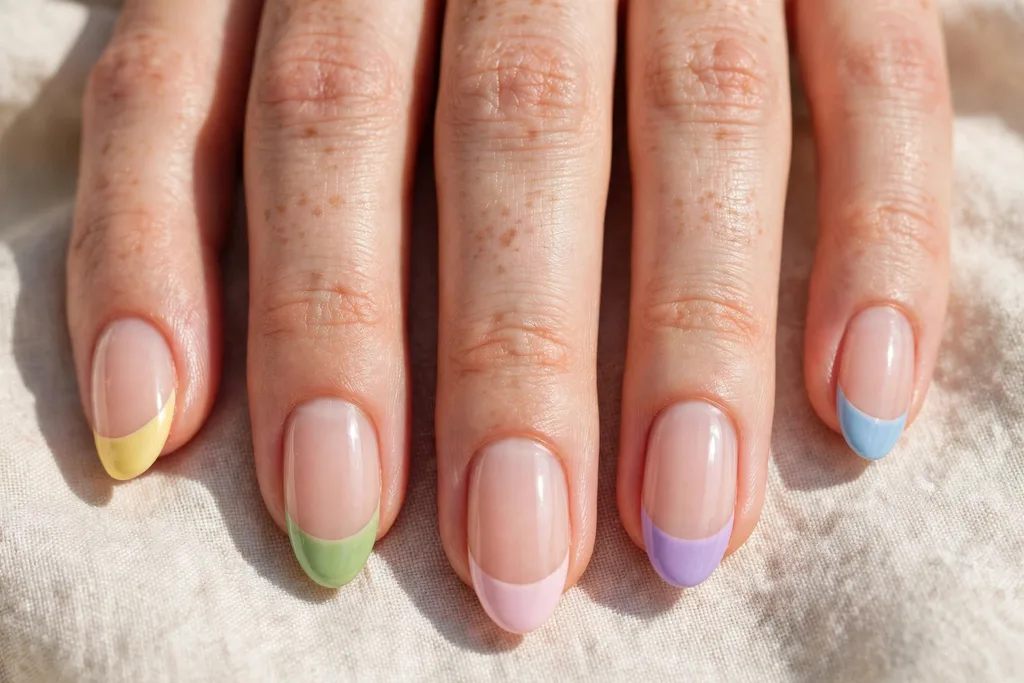
Base color: Sheer nude. Tip color: A different early spring pastel on each nail — daffodil yellow, new-leaf green, palest pink, lilac, and sky blue. Shape/length: Medium almond. Finish: Glossy. Difficulty: Easy. Best for: Wearing the whole fresh-start palette at once.
The mix-and-match set wears the season’s opening palette in one hand. Keep tip depth and shape identical on every nail, arranged lightest to brightest, so it reads as one manicure. As spring settles in, our Spring French Tip Nail Designs collection takes the palette deeper for the rest of the season.
13. Pistachio Cream French Tips
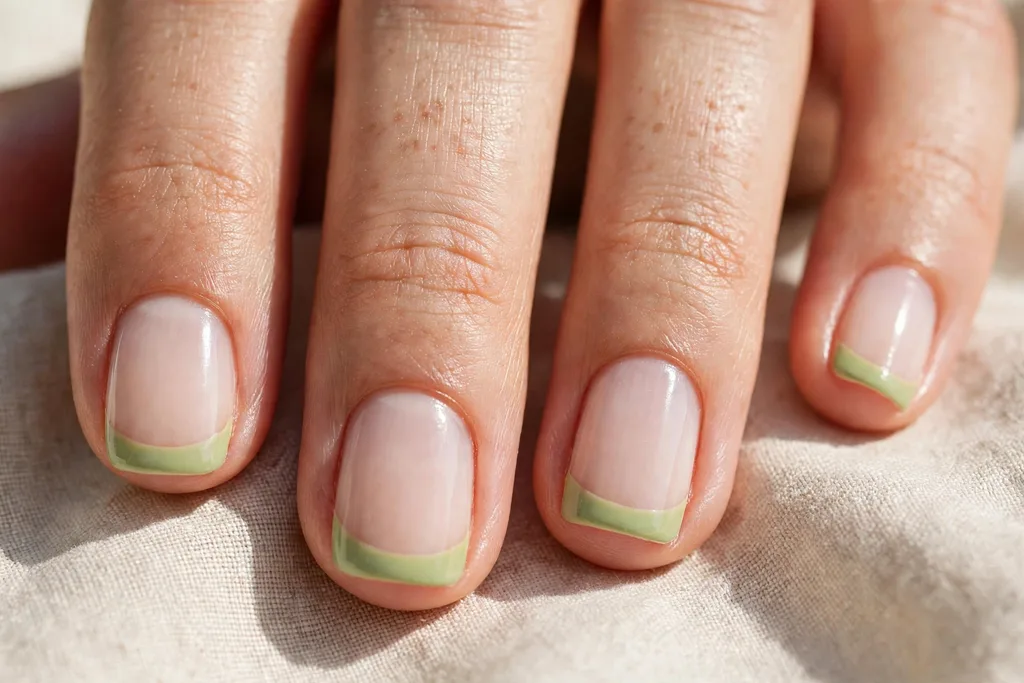
Base color: Milky nude. Tip color: Soft pistachio green. Shape/length: Short squoval or medium oval. Finish: Glossy. Difficulty: Easy. Best for: Warm skin tones and milky finishes.
Pistachio is the milky middle ground between mint and new-leaf green — a soft green with a drop of yellow that suits warm skin tones. With a milky base, the manicure looks creamy and calm, and on short nails it reads fresh, not heavy.
14. Lavender Haze Ombré French Tips
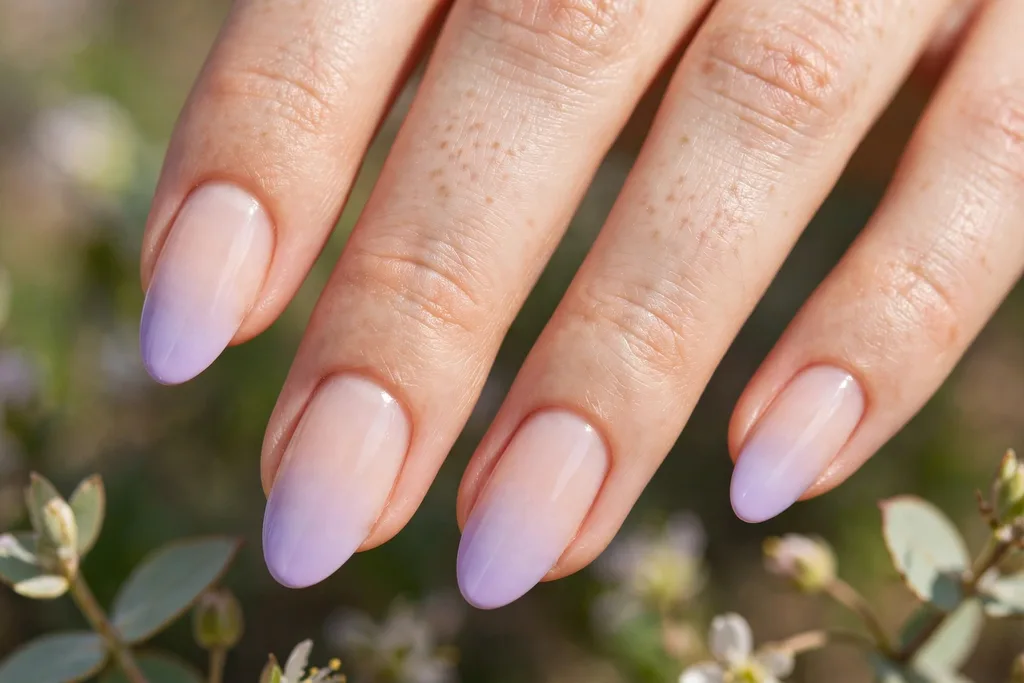
Base color: Sheer nude. Tip color: Lavender ombré, deeper at the edge fading upward. Shape/length: Medium almond. Finish: Glossy gradient. Difficulty: Medium. Best for: A soft, blended look with easy grow-out.
Ombré softens the smile line into a haze of lavender dissolving into the base. Sponge it on in two thin rounds, building strength at the free edge. With no hard line, chips and grow-out stay nearly invisible — practical for busy March weeks.
15. Rosewater Pink French Tips
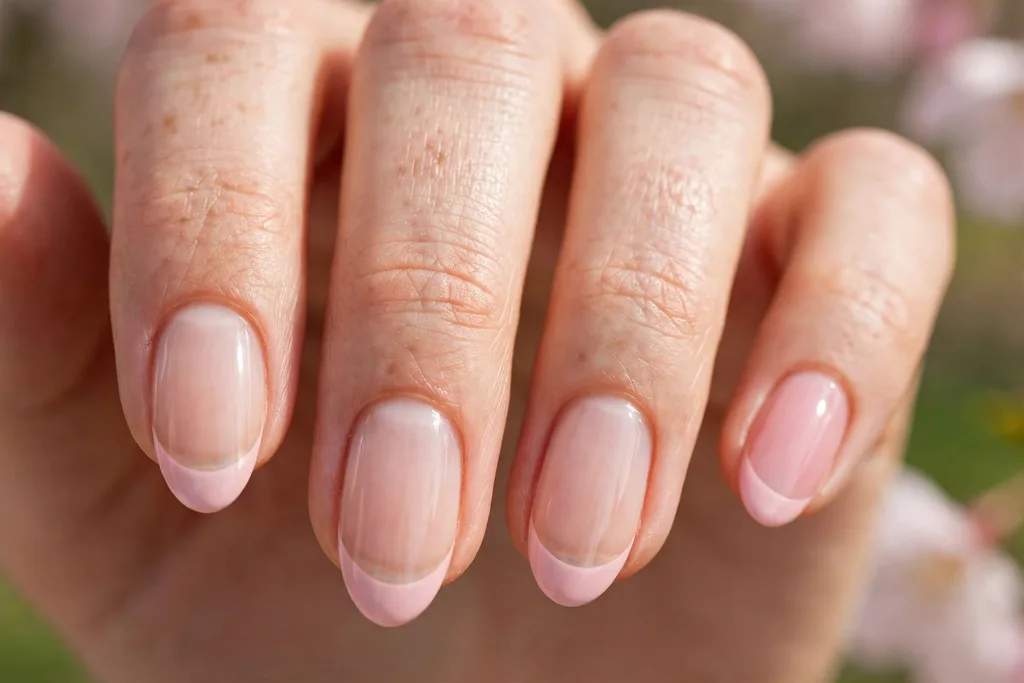
Base color: Sheer nude. Tip color: Soft rosewater pink. Shape/length: Medium almond. Finish: Glossy. Difficulty: Easy. Best for: A gentle step up from palest pink.
Rosewater pink has more depth than design 3’s palest blush — a clear, watery rose on the soft side of spring. It suits floral prints and light knits; two thin coats keep the watercolor feel even.
16. White Crocus French Tips
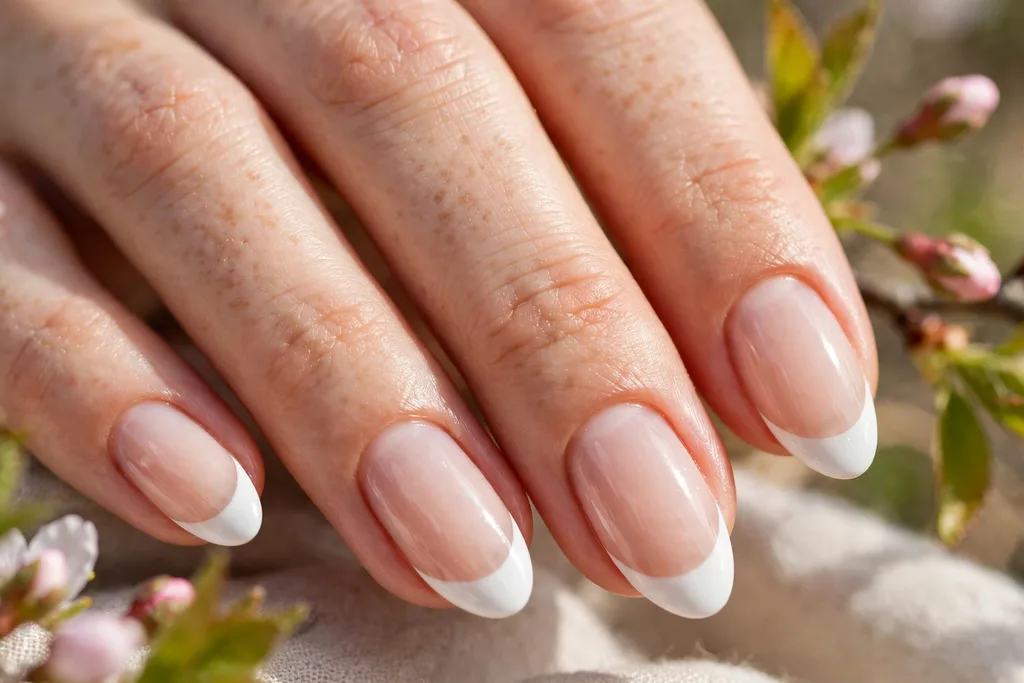
Base color: Sheer nude. Tip color: Soft white. Shape/length: Medium almond or squoval. Finish: Glossy. Difficulty: Easy. Best for: The cleanest possible fresh start.
Crocuses push through cold ground before almost anything else blooms, and a soft white tip has the same first-clean-day feeling. Choose a soft rather than stark white, keep the band neat and slim, and finish glossy.
17. Pale Gold Glitter Fade French Tips
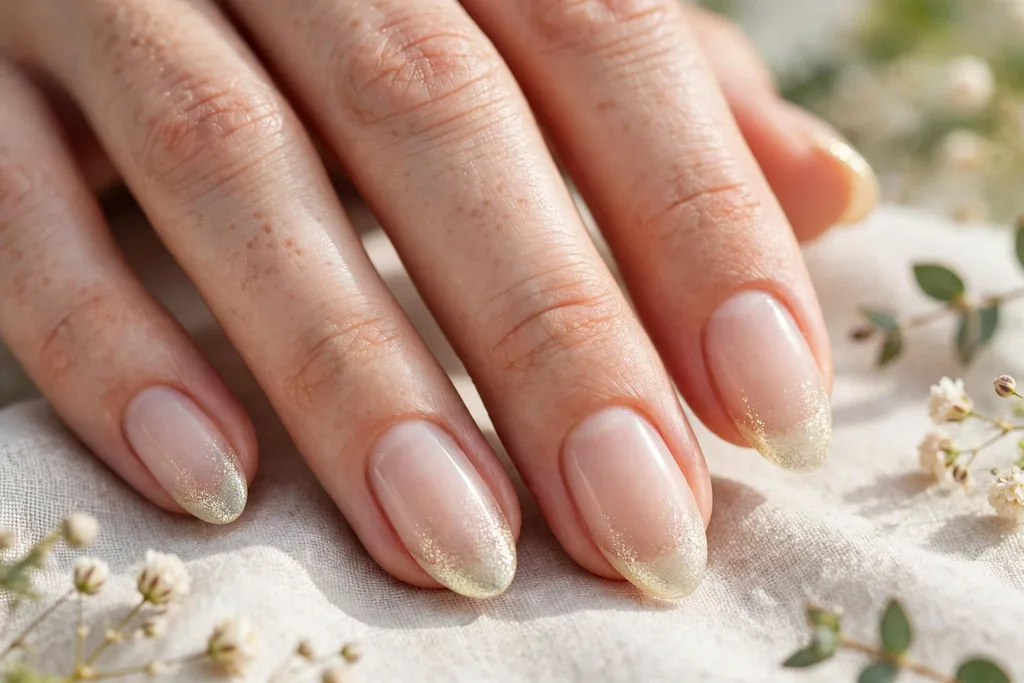
Base color: Sheer nude. Tip color: Pale gold glitter, faded. Shape/length: Medium almond. Finish: Sparkly gradient. Difficulty: Easy. Best for: Light sparkle for longer daylight.
Early spring sparkle should feel like sunlight, not party glitter. Dab pale gold glitter densely at the free edge, then drag a nearly dry brush downward so it thins into the base. The gradient hides uneven edges — one of the most beginner-friendly designs here.
18. Sage Sprout French Tips
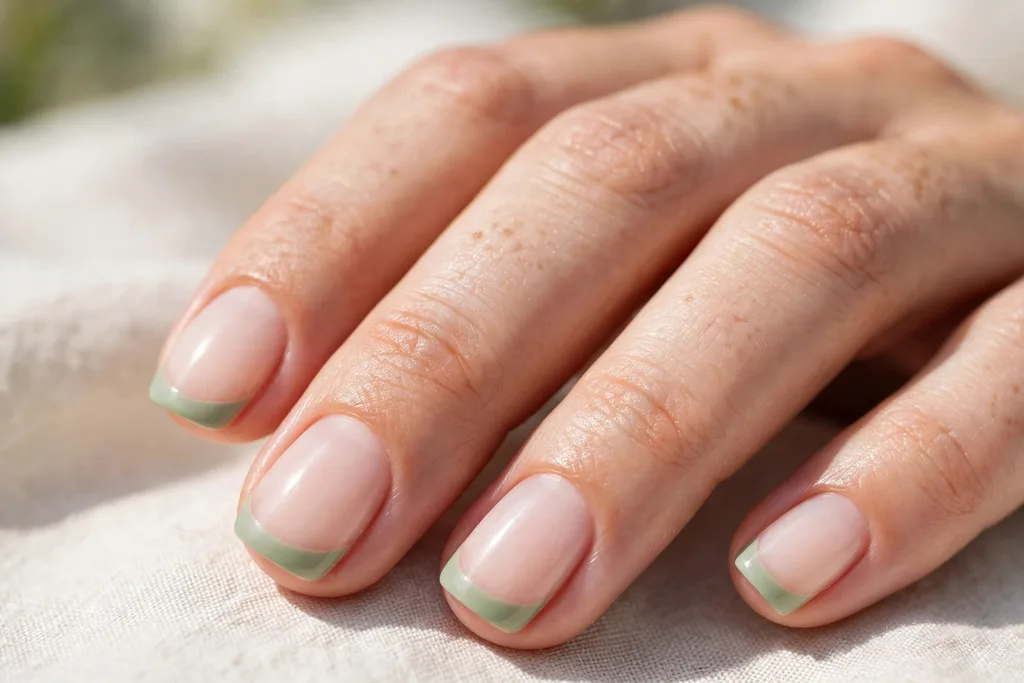
Base color: Milky nude. Tip color: Soft sage green. Shape/length: Short squoval or medium oval. Finish: Glossy. Difficulty: Easy. Best for: A muted, garden-fresh neutral.
Sage is the grey-softened green of new garden sprouts — calmer than new-leaf green and close to a neutral. It pairs with cream, tan, linen, and denim, and the milky base softens the contrast further, so the set suits workdays as well as weekends.
19. Iridescent Dew Chrome French Tips
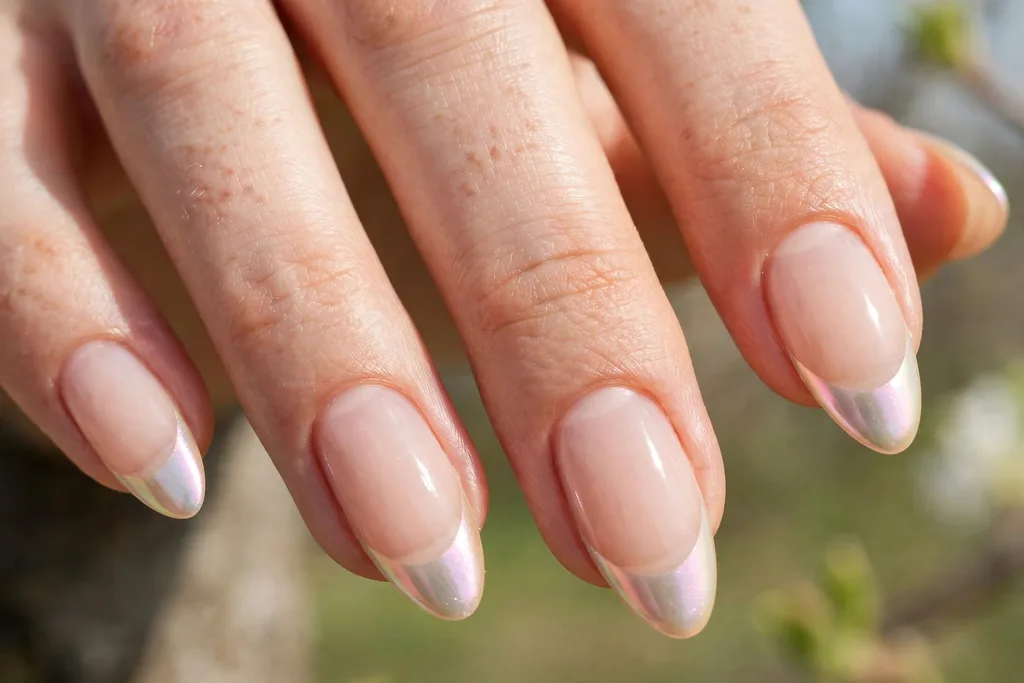
Base color: Sheer nude. Tip color: Iridescent pearl chrome. Shape/length: Long almond or medium almond. Finish: Glazed chrome. Difficulty: Medium. Best for: A dewy, light-shifting finish.
Iridescent chrome lays a pearly film over a pale tip, so the nails shift between pink, cream, and the faintest green as your hands turn — like dew catching morning light. Chrome powder needs a smooth, tack-free surface, so follow your product’s instructions and seal the free edge well.
20. Garden Two-Tone French Tips
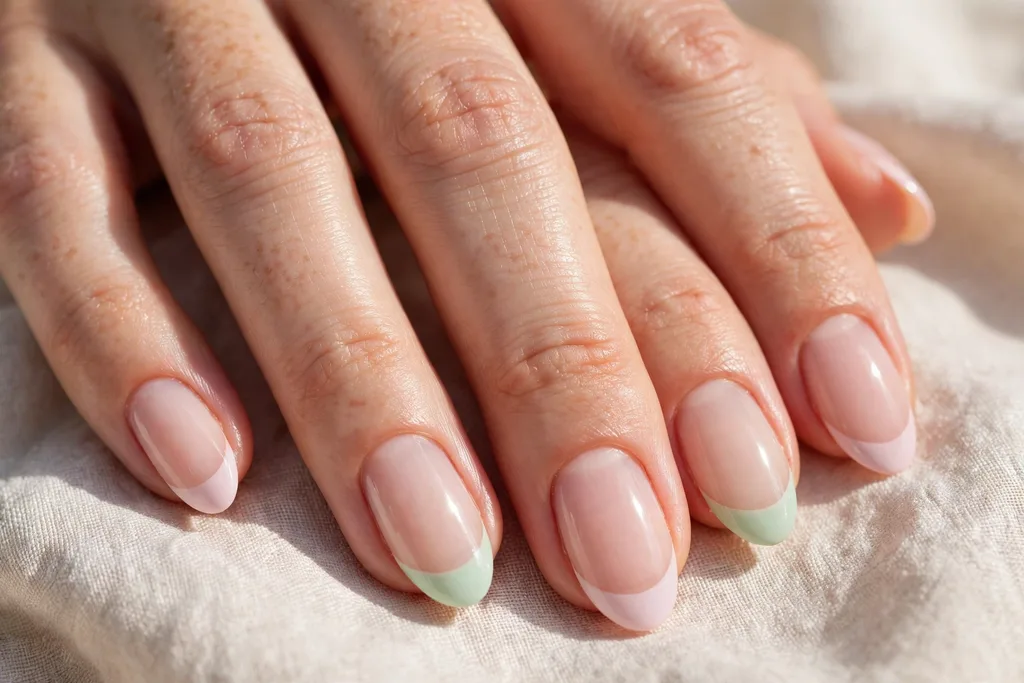
Base color: Sheer nude. Tip color: Palest pink and mint green, alternating. Shape/length: Medium almond. Finish: Glossy. Difficulty: Easy. Best for: A playful two-color reset.
Alternating the two softest shades on this list gives you nail-art interest with no drawing: pink for the blossoms, mint for the new leaves. Keep both tips the same depth and shape so the pattern reads deliberate, and finish glossy.
How to Choose Early Spring French Tips for the Season’s First Weeks
Start with how much winter is still in your wardrobe. In early March, most outfits are still knits and layers in cream, grey, and denim, so the palest designs here — palest pink, pearl white, sage, and pistachio — blend in gently yet feel new. Save brighter daffodil and new-leaf tips for lighter jackets and floral prints, when more color looks intentional. If a spring celebration is already on your calendar, our Easter French Tip Nails collection gathers the designs made for that day.
Then think about light and length. March daylight is bright but cool, and pale shades show every streak — thin coats and a glossy top coat keep pastels creamy instead of chalky. Early spring is also a hands-on season of closet swaps, garden prep, and travel planning, so short squoval and medium almond or oval lengths wear best. Fades, ombré, and low-contrast shades like buttercream hide grow-out longest if your schedule is full.
How to Do Early Spring French Tips at Home
Most of these designs need only a basic kit:
- Nail file and a gentle buffer
- Cuticle pusher and cuticle oil
- Base coat and a glossy top coat
- A sheer nude or milky polish for the base
- Tip polishes in your chosen early spring pastels
- A small flat brush and polish remover for clean-ups
- A dotting tool and toothpicks for daisies and cherry blossoms
- A makeup sponge for ombré and glitter fade designs
- Optional: tip guides or tape, and chrome powder for design 19
If French tips are new to you, our guide on How to Do French Tip Nails at Home covers the basic brush technique step by step:
1. Prepare your nails. Remove old polish, file into shape, push back cuticles gently, and lightly buff. Wash and dry your hands so the nail surface is free of oil and lotion.
2. Apply a thin base coat and let it dry, or cure it if you use gel, per the product’s instructions. Base coat also protects when switching straight from a dark winter shade.
3. Apply one or two thin coats of your sheer base color. Thin coats dry faster and look smoother than one thick coat — especially important under pale pastels.
4. Paint the tip freehand, with guides, or with tape along your smile line. Keep the band slim on short nails so the tip brightens rather than shortens the nail.
5. Let the tip color dry completely before adding any detail. Daisy dots, blossoms, and glitter placed on wet polish slide around and lose their shape.
6. Add accents with the smallest tools first: blossom and daisy dots, then sponged fades, then glitter pressed on last.
7. Clean up the smile line with a flat brush dipped in remover, then seal with top coat, capping the free edge of every nail.
8. Finish with cuticle oil once fully dry — March air is still dry, so moisturized cuticles make the whole fresh-start manicure look finished.
Common mistakes: loading pastel polish on thickly, which streaks, and choosing a summer-bright shade that fights a still-wintry wardrobe. Work safely, too: read label directions, work in a ventilated room, and keep polishes and removers away from heat and open flames, as the U.S. Food and Drug Administration notes in its overview of nail products. If a product irritates your skin or nails, stop using it.
How to Make Early Spring French Tips Last Through the Transition
Early spring is a wear test of a different kind: indoor heating still dries nails out, while garden prep and spring cleaning add water and friction. Build for both — cap the free edge with every coat, keep layers thin because thick polish peels, and wear gloves for cleaning and dishes. If shine dulls, one thin layer of glossy top coat refreshes the set in minutes.
General nail-care guidance from the American Academy of Dermatology supports these habits: keep nails clean and dry, moisturize the nail and cuticle regularly, and avoid using your nails as tools. Dry late-winter air makes nightly cuticle oil matter more, not less, in March. If you wear gel, never peel off a lifting edge — peeling can strip layers of the natural nail. Remove it as directed, or professionally.
Frequently Asked Questions
1. What colors are best for early spring French tip nails?
The palest end of the spring palette: daffodil yellow, new-leaf green, mint, pistachio, palest pink, lilac, soft peach, and pale sky blue. Pearl white and soft white keep things clean and minimal, while a pale gold glitter fade adds light rather than bold sparkle.
2. How are early spring nails different from regular spring nails?
Early spring designs cover the season’s first weeks — paler shades, softer contrast, and a winter-to-spring transition feel. As the season settles, spring designs move deeper and brighter. This collection stays at the fresh-start end.
3. When should I switch from winter nails to early spring nails?
Whenever the first signs show up — longer evenings, first daffodils and crocuses, lighter jackets. Most people switch in early March, trading deep winter shades for a pale pastel set that still works with knits.
4. Do pastel French tips work on short nails?
Yes. Keep the tip band thin and choose mid-tone pastels such as mint, pistachio, and new-leaf green, which brighten short nails without overwhelming them. Pale shades on a short squoval look clean and fresh, and tiny daisy dots scale down fine.
5. What is the easiest early spring design for a beginner?
A single-color pastel tip in mint, palest pink, or peach uses standard French technique and needs no art tools. The pale gold glitter fade is also beginner-friendly, because the gradient hides uneven edges instead of exposing them.
6. How do I keep pale pastel tips from looking streaky or chalky?
Use two or three thin coats with drying time between them instead of one thick coat, and float the brush rather than pressing it. A glossy top coat finishes the fix, leveling the surface so pale shades look creamy, not chalky.
7. Can early spring French tips work for the office?
Yes — the palest designs are the most office-friendly of the year. Palest pink, pearl white, sage, and pistachio read as neat, fresh grooming on short to medium lengths. Save daisy accents and the five-shades set for relaxed dress codes or weekends.
8. Can I do early spring French tips with gel polish or press-ons?
Yes. Every design works in regular polish or gel, and press-ons can be painted and decorated before application, giving you a flat surface for daisies and blossoms. With gel, follow the curing times in your product’s instructions.
9. Which early spring designs last the longest?
Fades and low-contrast designs forgive the most: the lavender ombré, the glitter fade, and milky shades like buttercream and pistachio hide chips and grow-out well. Deep or bright single shades show wear sooner at the free edge.
10. How do I match early spring nails to a still-wintry wardrobe?
Choose shades that work in both seasons: soft white, pearl, palest pink, and sage sit comfortably beside cream, grey, and camel knits. Add one brighter accent — daffodil or new-leaf green — rather than mixing brights, so the transition looks deliberate.
Early spring French tips are a small, cheerful reset: one pale palette that carries your nails out of winter and into the first flowers of the year. When the holiday weekends arrive, our Spring Holiday French Tip Nails collection covers the celebrations — until then, pick one fresh shade and let March do the rest.