Table of Contents
- Introduction
- What Are Jelly Nails?
- 25 Ideas at a Glance
- 25 Designs to Try
- How to Choose Your Jelly Shade
- How to Make Jelly Nails Last
- FAQs
- Final Thoughts
Some manicures sit on the nail. Jelly nails glow through it. A jelly finish is translucent — tinted, glossy and see-through — so the colour looks like stained glass, fruit jelly or a hard candy held up to the light: you see the shade, and you see the living nail glowing softly underneath it. Put that finish on a French tip and you get something no opaque polish can copy: a tip with depth, where the white edge floats in tinted glass instead of sitting flat on top of it.
That is what this guide is about. Below you will find 25 jelly designs, each one photographed and explained in simple words: full-colour jelly sets in lilac, tangerine, cherry and sapphire, skittle mixes, pastel café sets, and — at the end of the list, where they belong — the true jelly French tips, where a translucent jelly base meets a clean white smile line. Wrapped around the designs is the knowledge that makes jelly work: what jelly polish actually is, how it differs from sheer, milky and opaque finishes, how the French version is built, and the honest care facts (including the staining nobody warns you about).
One framing note, because honesty is this site’s habit: jelly began as a full-nail finish, and most of the colour stories below are full jelly sets. Each one also gives you its French translation — the jelly shade on the base, the tip treatment that completes it — because that pairing is where this trend is heading. If you already love the soft-focus glow of our velvet nails design ideas, jelly is its clearer, glassier sister: velvet diffuses light, jelly lets it straight through.
What Are Jelly Nails? See-Through Colour, Built in Layers
A jelly nail is made with a translucent gel or polish — colour suspended in a clear base, like tint in glass. One thin coat gives the faintest wash; two or three build the colour deeper while the nail beneath stays visible, especially the pale free edge, which glows through the tint like the light patch in a piece of candy. That visible depth is the entire point. An opaque polish is a wall; a jelly polish is a window.
The modern version comes from South Korea, where the same finish is called syrup nails: thick, self-levelling syrup gels were developed to be layered sheer-on-sheer until the colour looks poured rather than painted. Nail artist Kesang Gurung, whose jelly work is featured in IPSY’s guide to Korean jelly nails, puts the rule simply: the more sheer layers you add, the more depth the manicure will have — and because the layers are translucent, colours blend where they overlap instead of fighting. Western salons recreate the same effect with jelly gel polishes, or by mixing a few drops of a saturated colour into clear top coat, the classic DIY recipe.
Jelly vs sheer vs milky vs opaque — where are the lines? All four sit on one transparency scale:
| Finish | Transparency | What it looks like | Best on |
|---|---|---|---|
| Jelly | Translucent — colour you can see through, free edge glows beneath | Tinted glass, hard candy, fruit jelly; glossy and dimensional | Full nails and French bases where depth is the effect |
| Sheer | Barely tinted — a whisper of colour, nail clearly visible | “Your nails but better”; a healthy tint and shine | Natural looks, office wear, French bases |
| Milky | Semi-opaque and cloudy — colour with white mixed in | Soft, creamy, diffused; the free edge is blurred, not visible | Baby boomer fades, soft French bases, bridal sets |
| Opaque | Fully solid — nothing shows through | Flat, even colour with a hard edge | Classic French tips, full-colour sets, nail art bases |
The practical differences matter at the salon. Sheer is jelly’s palest cousin — one coat of jelly is a sheer, but jelly shades are mixed to stay colourful at two or three coats, where a sheer wash would just look watery. Milky hides the free edge, which is why it is the forgiving choice for stained or uneven nails; jelly shows everything underneath, which is both its beauty and its warning. And opaque is where the classic French tip lives — which sets up the jelly French’s cleverest trick, below.
How the jelly French tip works. There are two builds, and this guide’s final six designs use them both. In the first, the whole nail gets a translucent jelly base in your colour, and the smile line is painted in opaque white (or an opaque shade) on top: the tip reads crisp and classic, while the bed of the nail glows with tinted depth no flat base can match. In the second, the tip itself is jelly — a tinted, see-through edge over a milky or natural base — for a softer, stained-glass French where the free edge looks like coloured glass. The first build is the one to book if you want people to say “French manicure”; the second if you want them to say “what is that?”
Two more techniques belong in a jelly artist’s kit. Layering art inside the jelly: a decal, a fleck of glitter or a tiny flower placed between coats gets suspended in the tint like fruit in gelatin — IPSY’s guide notes the same step, adding the detail before the final coat. Our glitter French tip nails collection shows the sparkle family that sandwiches best. And the magnetic cousin: a translucent magnetic gel gives jelly a moving band of light, the effect our cat eye French tip nails are built on — proof that see-through finishes are a whole family, not a single trick. Mainstream coverage agrees the family is having a moment: The Every Girl’s jelly nails guide calls the finish one of the biggest nail trends of the year, low-effort and practically foolproof — with one honest caveat this guide shares: because jelly is see-through, it cannot hide the nail underneath, so prep and nail health show.
25 Jelly Nails Design Ideas at a Glance
| # | Design | Colours / finish | Best shape & length | Best for |
|---|---|---|---|---|
| 1 | Sheer Lilac Glass Set | Sheer lilac jelly, gloss | Almond, medium | The softest colour entry |
| 2 | Tangerine Jelly Set | Tangerine-orange jelly, gloss | Almond, medium | Citrus brights, summer |
| 3 | Pink Jelly Flower Set | Pink and red jelly, gloss | Almond, medium | Two-tone pink lovers |
| 4 | Rainbow Jelly Skittle Set | Red, blue, pink jelly mix | Medium | Indecisive colour fans |
| 5 | Mini Multicolour Jelly Set | Mixed brights, gloss | Short | Colour on small nails |
| 6 | Cherry Red Jelly Set | Cherry-red jelly, gloss | Almond, medium | The classic jelly shade |
| 7 | Colour Pop Jelly Art Set | Mixed bright art, gloss | Medium | Two-hand art sets |
| 8 | Sunshine Jelly Art Hands | Orange and pink art, gloss | Medium | Golden-hour colour |
| 9 | Lime Swirl Jelly Set | Green-yellow swirl jelly | Short | Retro swirl fans |
| 10 | Tropical Jelly Skittle Set | Pink, orange, green jelly | Short | Holiday skittles |
| 11 | Baby Blue Jelly Art Set | Baby-blue jelly, star/dot art | Almond, medium | Soft celestial sets |
| 12 | Baby Blue Jelly Beach Set | Baby-blue jelly, tiny art | Almond, medium | Beach-day jelly |
| 13 | Pastel Jelly Mix Set | Pastel jelly mix, gloss | Medium | Retro pastel styling |
| 14 | Deep Green Jelly Set | Deep green jelly, gloss | Medium | Dark jelly, golden light |
| 15 | Pastel Jelly Coffee Set | Pastel orange and blue jelly | Medium | Café-pastel days |
| 16 | Sapphire Jelly Set | Sapphire-blue jelly, gloss | Almond, medium | Jewel-tone depth |
| 17 | Lilac Jelly Set | Lilac jelly, gloss | Medium | Café lilac, second take |
| 18 | Clear Jelly Natural Set | Clear/sheer natural jelly | Short–medium | Barely-there glass nails |
| 19 | Mint French Jelly Set | Mint jelly French tips | Medium | A true jelly French |
| 20 | Pink Jelly French Tips | Pink jelly base, white tips | Almond, medium | The classic jelly French |
| 21 | Red Jelly French Tips | Red jelly, milky white tips | Almond, medium | Candy-red French |
| 22 | Purple Jelly French Tips | Purple jelly, soft white tips | Almond, medium | Grape-jelly French |
| 23 | Blue Jelly French Tips | Blue jelly, crisp white tips | Almond, medium | Glass-blue French |
| 24 | Nude Jelly French Tips | Nude jelly, fine white tips | Oval or almond, medium | Glass-skin minimalism |
| 25 | Rainbow Jelly French Tips | Rainbow jelly bases, white tips | Almond, medium | Every colour, one French |
25 Jelly Nails Design Ideas to Try
1. Sheer Lilac Glass Set
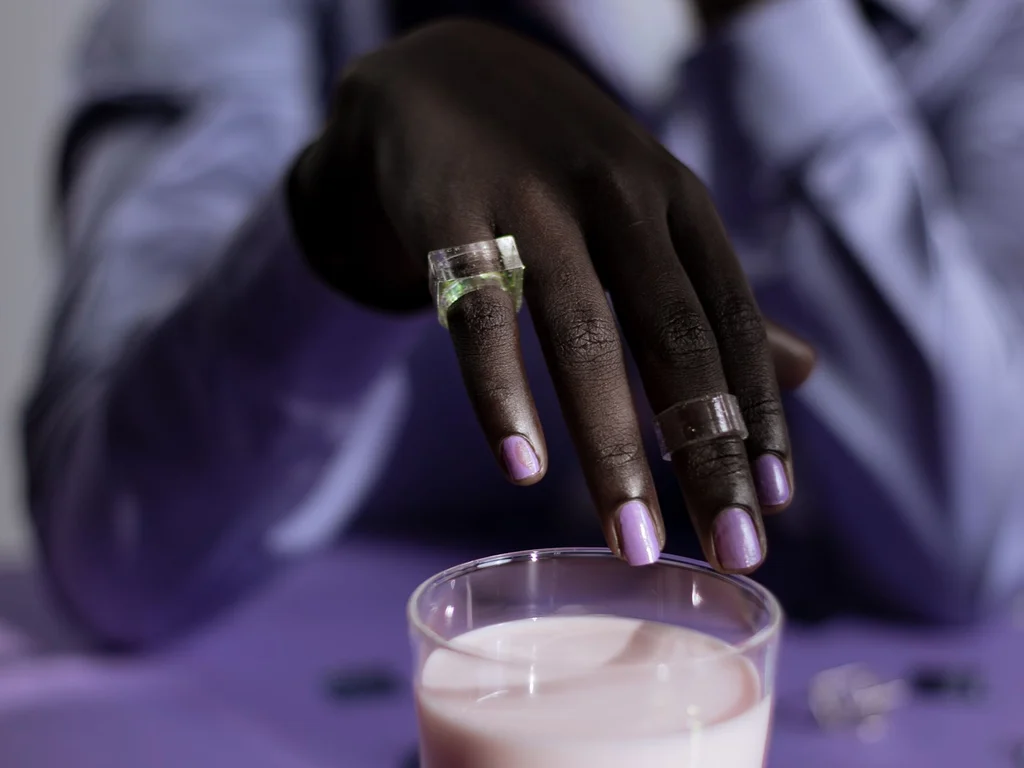
Glossy sheer lilac nails reaching over a glass of milk on a purple table — lilac is where jelly beginners should start. In opaque polish, lilac can look chalky; in jelly, the same shade turns to tinted glass, with the natural nail warming it from underneath. The monochrome purple styling shows how soft the effect stays even in a “colour” set. As a French, ask for this lilac jelly as the base with a milky white tip: the cloud-soft edge keeps the whole set dreamy rather than graphic.
Best for: first jelly sets, lilac lovers and soft spring colour.
Salon tip: lilac jelly needs two coats minimum. One coat reads as a grey-ish tint on many skin tones; the second coat is where the flower colour arrives.
2. Tangerine Jelly Set
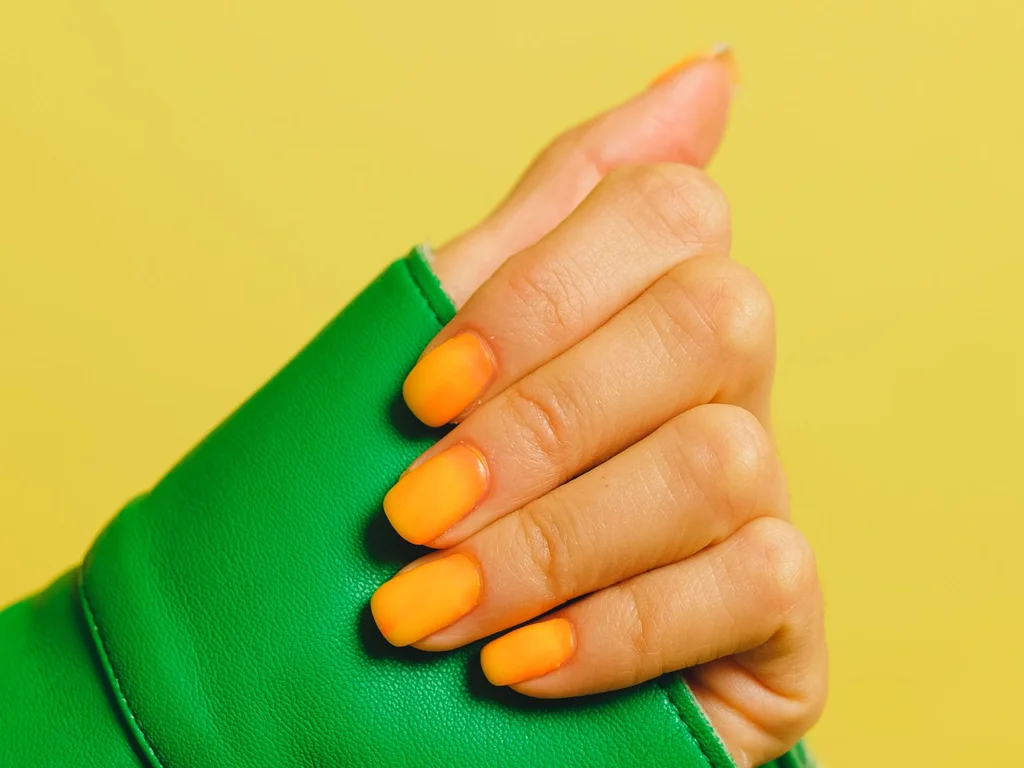
Glossy tangerine-orange nails against a bright yellow background, with a green sleeve for maximum contrast. Orange is jelly’s natural show-off shade: the translucency makes it look like the inside of a citrus segment, juicy rather than flat. Brights like this are also the most forgiving jelly colours, because saturated pigment hides minor layering streaks that pale shades reveal. The French translation: tangerine jelly base, cream-white tips — a summer French that looks like it was dipped in juice.
Best for: summer sets, citrus lovers and warm skin tones.
Salon tip: orange and red jellies can leave a temporary tint on the natural nail. A proper base coat is not optional here — it is the difference between a colour and a stain.
3. Pink Jelly Flower Set
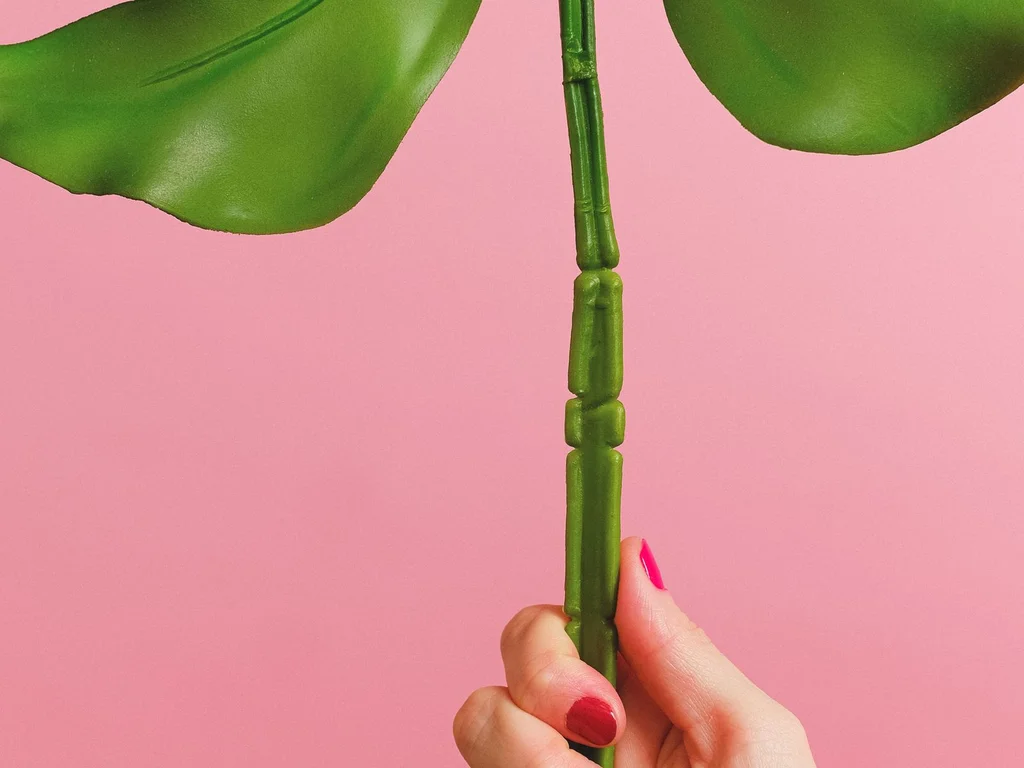
Glossy pink and red nails holding a green monstera stem against a pink backdrop. Two jelly shades on one hand is a lesson in how the finish behaves: the pink reads soft and glassy, the red reads deep and candied, yet they belong together because the translucency unifies them. Pink is also the shade family where jelly and French were always destined to meet — and this set’s own French version is waiting at design 20.
Best for: pink devotees, two-tone sets and studio-photo colour.
Salon tip: when mixing two jelly shades, keep their coat counts equal. One shade at two coats and the other at three breaks the glassy harmony — they stop looking like one family.
4. Rainbow Jelly Skittle Set
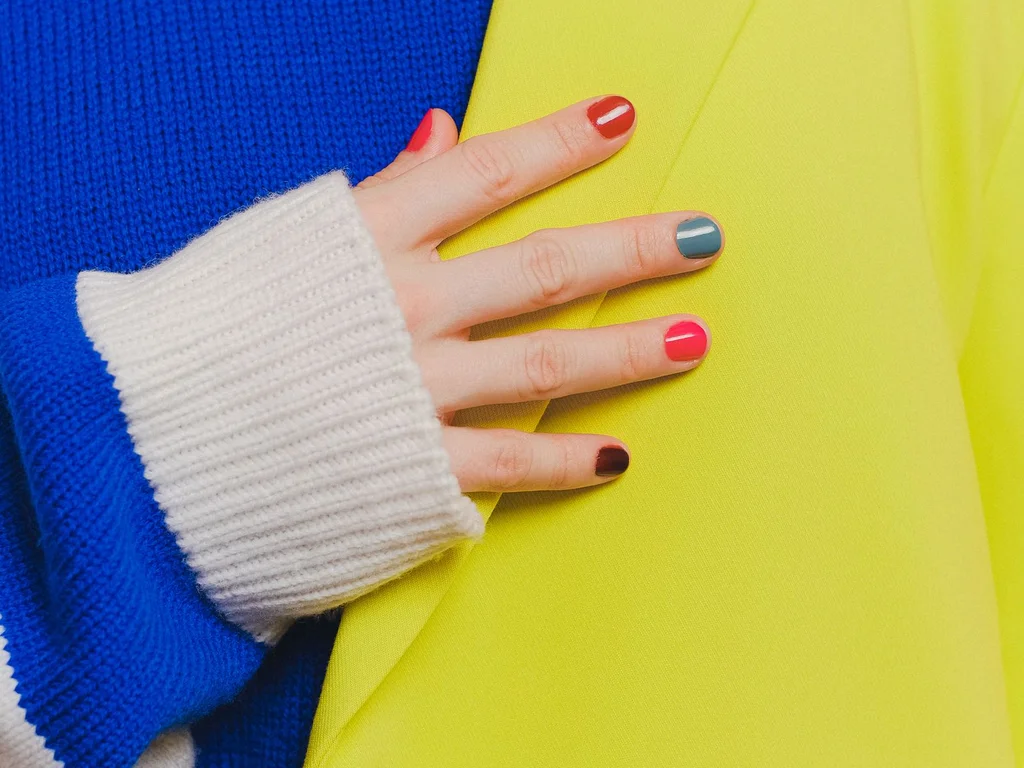
Mixed glossy nails in red, blue and pink on one hand against a yellow backdrop — the skittle manicure, jelly edition. Skittles work better in jelly than in any other finish, because translucency softens the clash: five see-through colours look like a row of boiled sweets, while five opaque colours look like a swatch card. Keep the shape and length identical on every nail and let the colours be the only difference. Design 25 turns this exact idea into a French.
Best for: indecisive colour lovers and festival sets.
Salon tip: paint the darkest shade first and the lightest last. If you smudge and need to redo one nail mid-set, the pale shades forgive; the deep blue does not.
5. Mini Multicolour Jelly Set
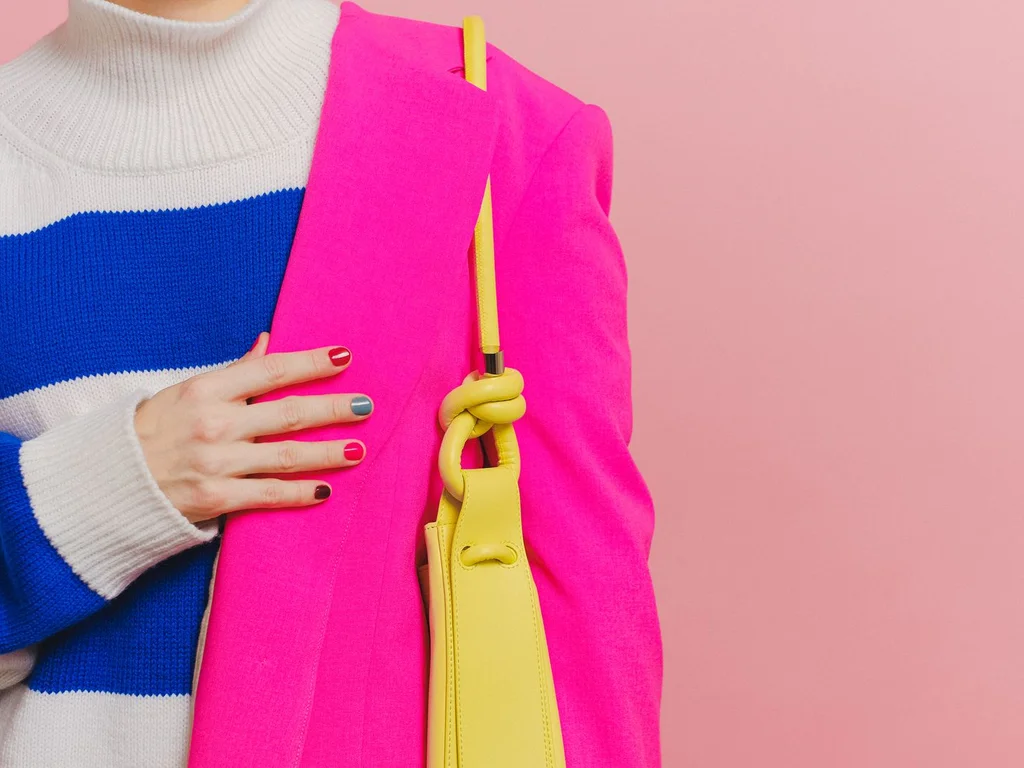
Small colourful glossy nails on a hand resting on a hot pink blazer — jelly’s short-nail proof. There is a myth that translucent finishes need length to show their depth. This set disproves it: on short nails the jelly reads as neat drops of colour, clean and deliberate, and the mixed shades keep small nails from looking plain. Short nails also suit jelly practically — less free edge means less of the staining-prone tip area on show.
Best for: short nails, colour minimalists and blazer-and-office styling with a twist.
Salon tip: on short nails, cap the free edge with the jelly colour itself before top coat. The edge is where short nails chip, and colour-capping makes chips invisible for days longer.
6. Cherry Red Jelly Set
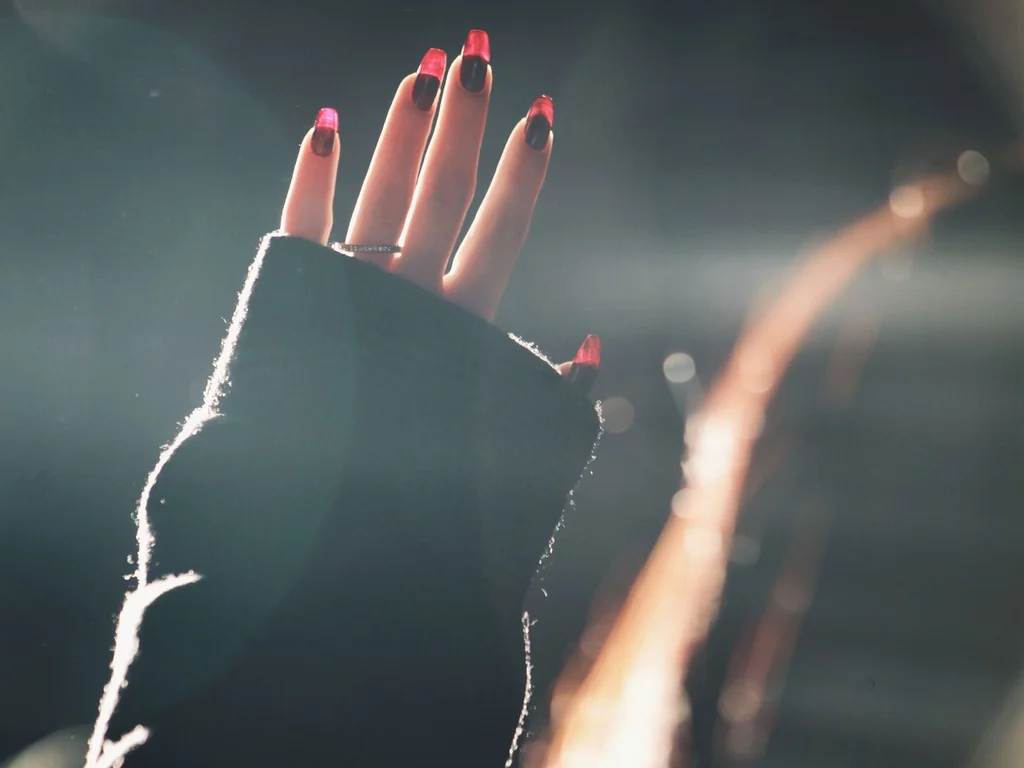
Glossy cherry-red nails catching a bright sunbeam against a dark background. Cherry is the shade that started the jelly conversation — the original candy nail, translucent enough to glow in sunlight exactly as it does in this photo. Red jelly is more wearable than opaque red for one subtle reason: your own nail showing through softens it by half a shade, so it reads juicy instead of severe. Save design 21 for its French form; wear this full version when the calendar says celebration.
Best for: classic-red lovers who want it softer, and evening light.
Salon tip: cherry jelly deepens noticeably between coat two and coat three — decide your target depth on one nail first, then match the rest, or the set drifts uneven.
7. Colour Pop Jelly Art Set
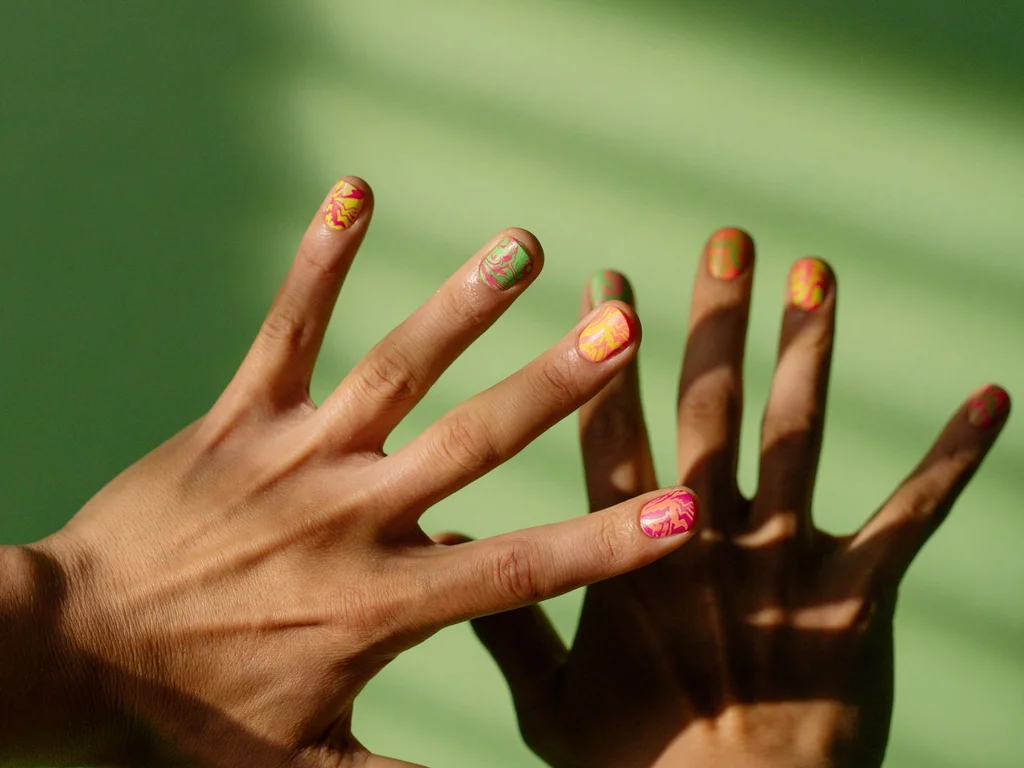
Two hands of colourful glossy art nails on a green background. Jelly is the best art base in the polish drawer because art placed between jelly layers gains real depth — a dot painted after coat one and covered by coat two appears to float inside the nail, suspended like fruit in gelatin. This two-hand set is the playground version: different art ideas sharing one glassy finish. On a French, the same trick puts one tiny floating detail on an accent nail over a jelly base.
Best for: nail-art lovers and two-hand statement sets.
Salon tip: cure (or fully dry) each layer before adding art and the next coat. Wet-on-wet art bleeds in jelly faster than in opaque polish, because the tint carries the pigment sideways.
8. Sunshine Jelly Art Hands
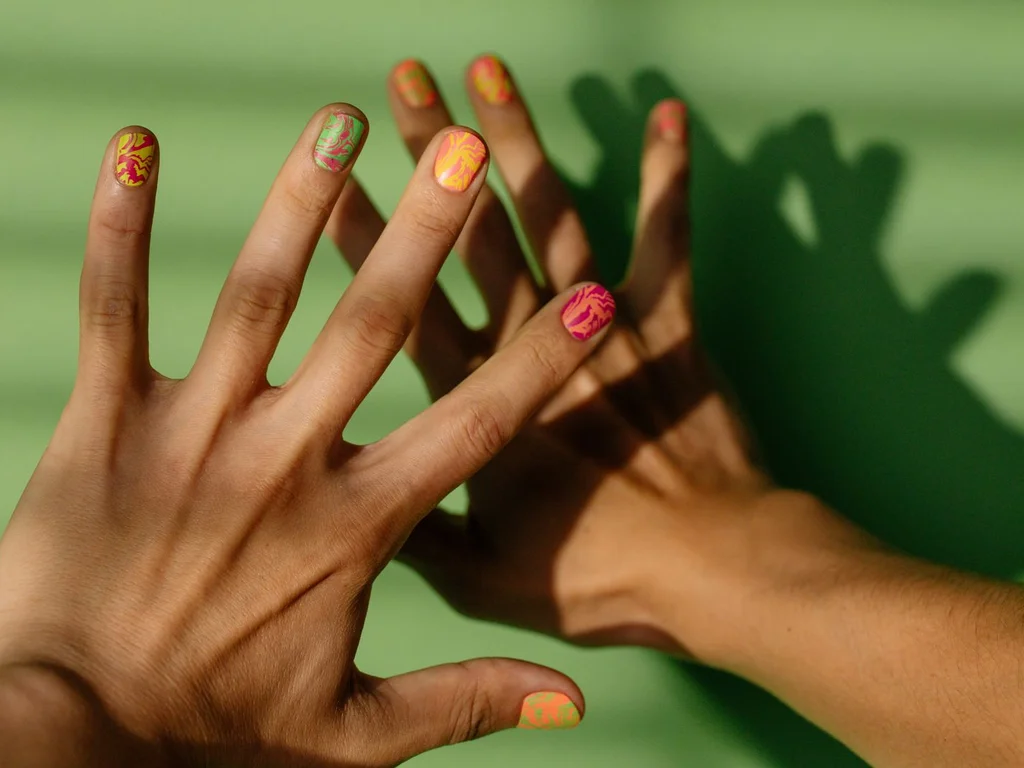
Orange and pink glossy art nails with dramatic leaf shadows across a green wall. This photograph understands jelly’s party trick: the finish is light-dependent. In flat light a jelly set is pretty; in raking sunlight it turns three-dimensional, every layer casting its own tiny glow. Orange-pink is the sunset palette of the jelly world, and the two shades blended at the edges — something only translucent colours can do — is the technique to ask for by name: a jelly melt.
Best for: summer evenings, holidays and sunset-palette fans.
Salon tip: a jelly melt is blended while both colours are wet, with a near-dry brush dragged once between them. More than one pass muddies it — practise on a tip first.
9. Lime Swirl Jelly Set
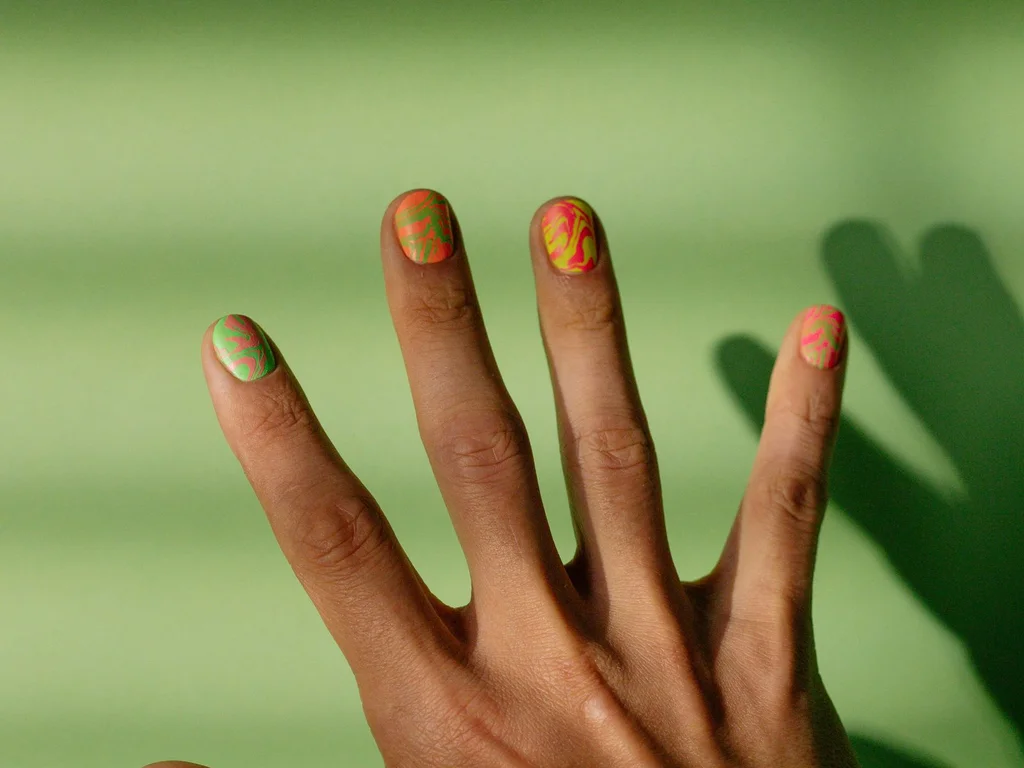
Short green and yellow swirl nails against a green backdrop. The swirl is jelly’s retro signature — two translucent shades marbled together so the colours overlap into a third where they cross. In opaque polish a swirl is two colours side by side; in jelly it is genuinely blended colour, which is why the effect looks like pulled sugar. Short length suits it: the pattern is busy, and a short nail keeps it cute instead of loud.
Best for: retro and Y2K styling, short nails, green lovers.
Salon tip: swirl with a toothpick or fine liner while the second coat is wet, then stop. Jelly keeps moving for a few seconds after you do — overworking a swirl is the only way to ruin one.
10. Tropical Jelly Skittle Set
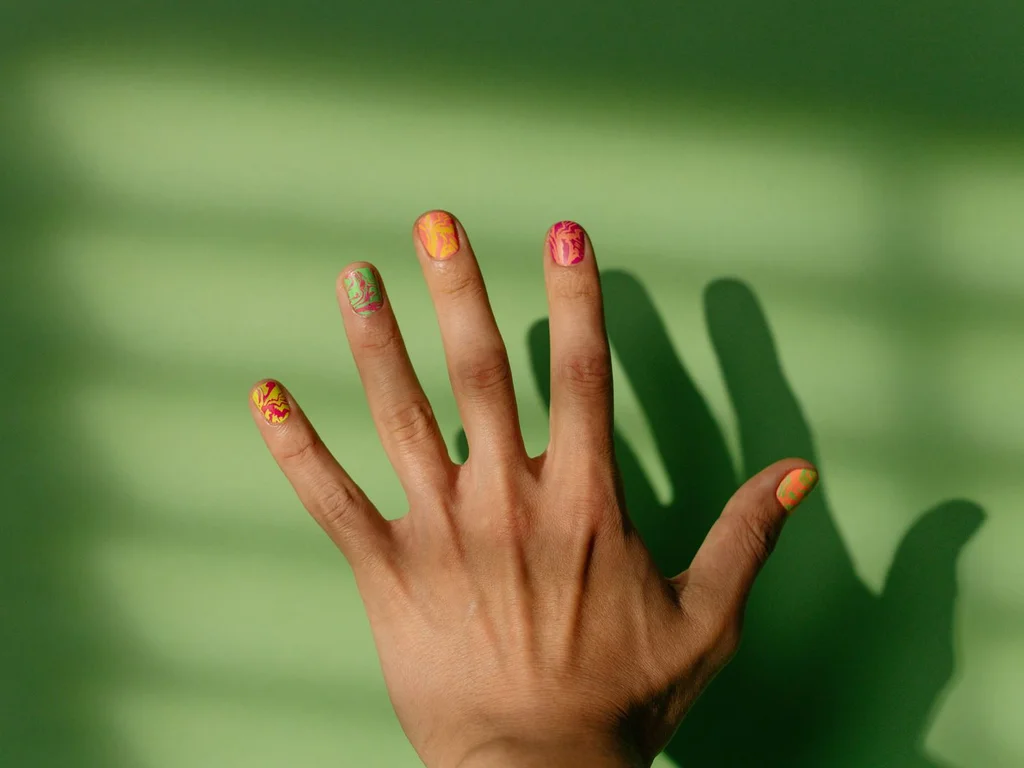
Short multicolour nails in pink, orange and green on a green background — the tropical skittle. Where design 4 mixes red-blue-pink at medium length, this one goes shorter and warmer: the holiday palette. Tropical shades are jelly’s home turf (the finish was practically invented for colours named after fruit), and on short nails the set survives actual holiday behaviour — swimming, sunscreen, suitcase zips — better than any long set in this guide.
Best for: beach holidays, short nails and fruit-salad colour.
Salon tip: sunscreen dulls jelly’s gloss faster than water does. A quick top-coat refresh at the halfway point of a holiday brings the glass back in two minutes.
11. Baby Blue Jelly Art Set
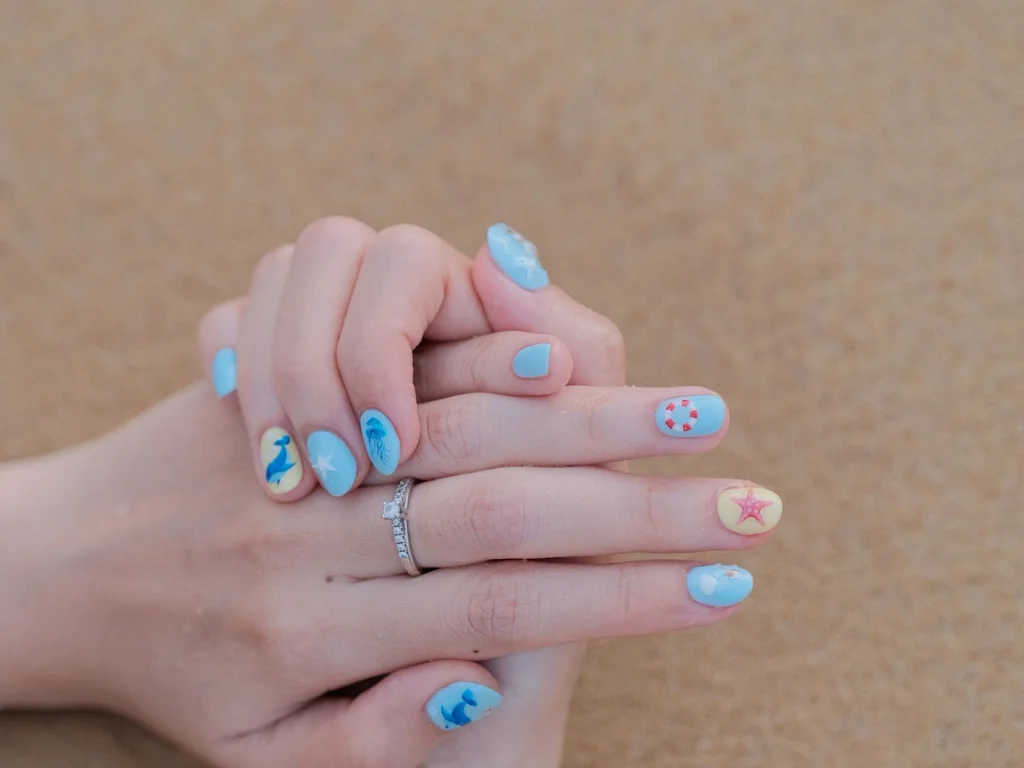
Glossy baby-blue nails with tiny star and dot art, hands gently clasped. Blue jelly is the colour of swimming pools and sea glass — the moment it goes translucent it looks wet. The little stars and dots are placed over the jelly here; floated between layers (design 7’s trick) they would sit inside the blue like bubbles. Either way, pale blue plus tiny art is the softest celestial set in the guide, and its French form — blue jelly base, white tip — is design 23.
Best for: soft celestial style, blue lovers and gentle nail art.
Salon tip: pale blue jelly shows every air bubble as a white speck. Slow brush strokes and a few seconds’ rest before curing let bubbles rise out of syrup gels.
12. Baby Blue Jelly Beach Set
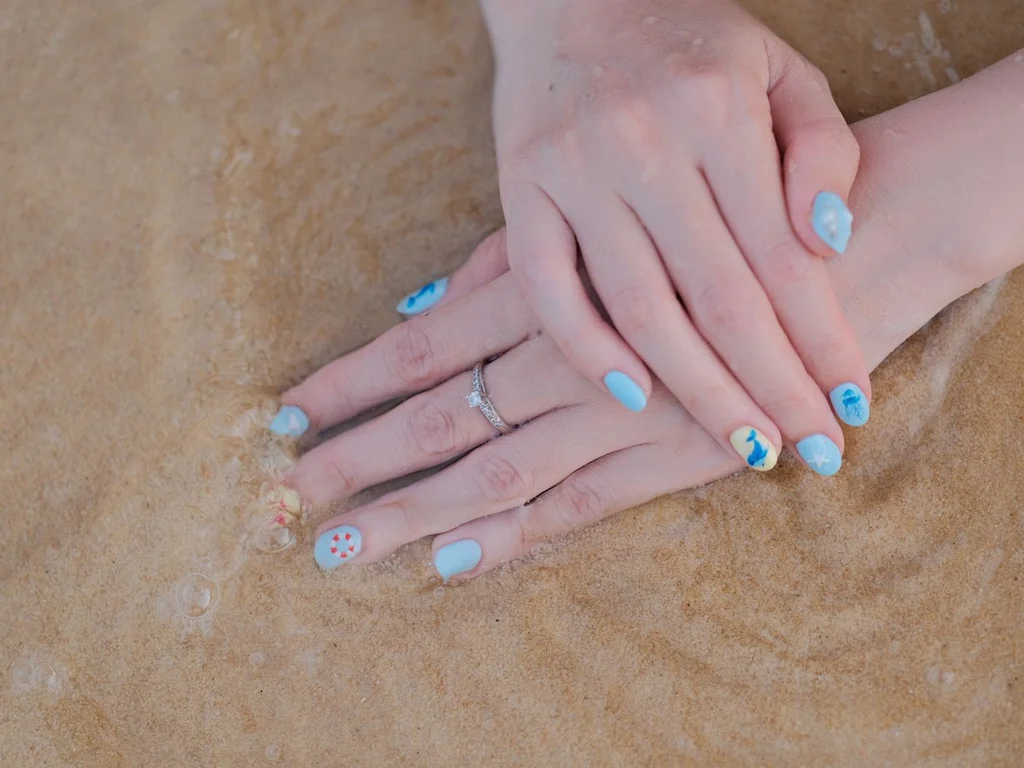
The baby-blue set with tiny art details, hands resting on wet beach sand. Same colour family as design 11, different truth: this is jelly photographed where it will actually be worn. Wet sand, daylight and water are jelly’s best light — the blue looks like the sea it is styled on. Use this photo when choosing between baby blue and the deeper sapphire of design 16: in outdoor light, baby blue stays pastel; in evening light it nearly disappears. Choose by your calendar, not the salon’s lighting.
Best for: beach days, daytime events and pastel-blue purists.
Salon tip: rinse salt water off jelly sets and re-oil the cuticles. The gel itself is waterproof; the skin around it dries out, and dry cuticles are what make a holiday set look tired.
13. Pastel Jelly Mix Set
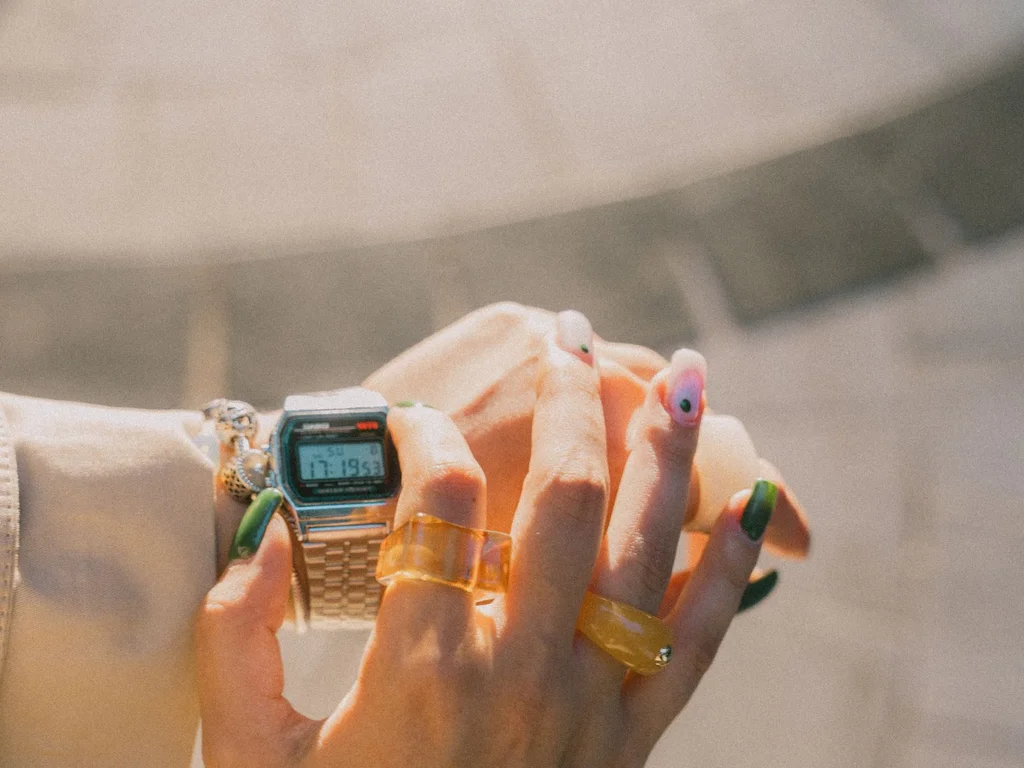
Pastel multicolour nails styled with chunky amber rings and a retro digital watch. Pastel jelly is a balancing act: thin the colour too much and it vanishes, build it too far and it turns opaque and loses the point. At the right two coats, pastels look like frosted glass — soft colour with light inside it. The retro styling is honest about the mood: this is the Y2K corner of the jelly world, playful and a little nostalgic. Keep every pastel at the same coat count so the mix reads as one set at one depth.
Best for: retro styling, spring sets and pastel collectors.
Salon tip: amber and tortoiseshell jewellery warms pastel jelly beautifully in photos — if you shoot your sets, style one hand with a warm ring and watch the pastels glow against it.
14. Deep Green Jelly Set
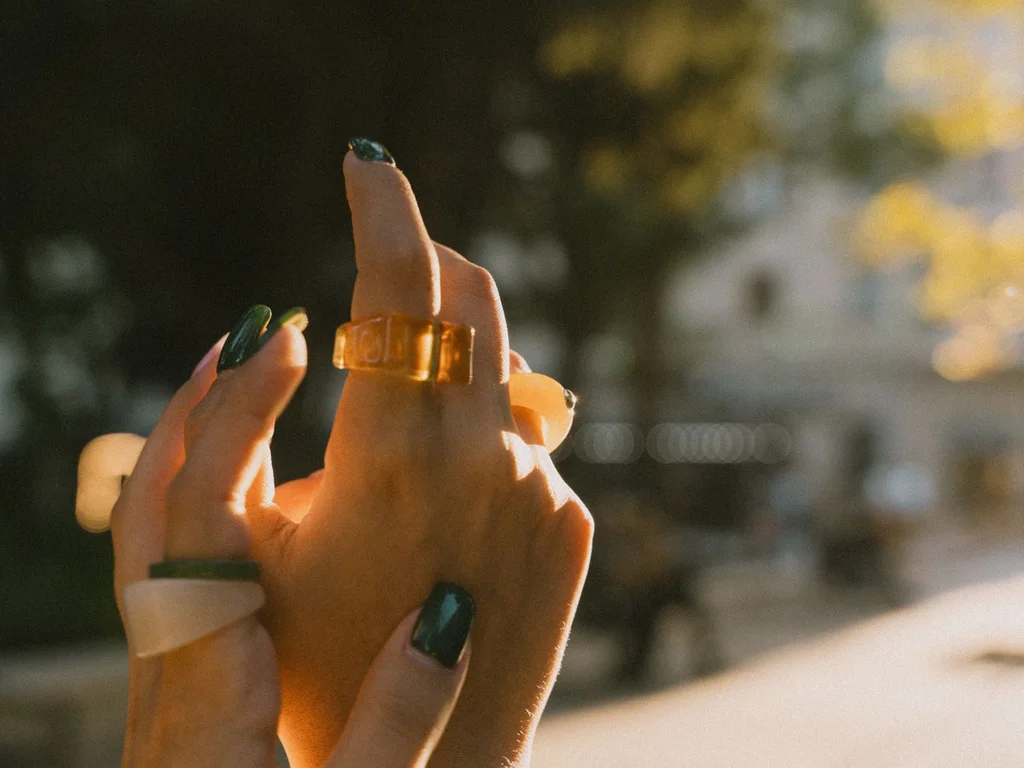
Dark green glossy nails with chunky amber rings, shot in golden outdoor light. Deep shades are jelly’s surprise: people expect translucency to weaken a dark colour, but a deep green jelly in sunlight looks like a gemstone — the light enters, bounces around, and the colour gains a depth opaque green cannot reach. Golden light is doing real work in this photo; indoors, the same set reads darker and moodier. Both moods are a reason to choose it, but know which one your week holds more of.
Best for: autumn and winter sets, jewel-tone lovers, golden-hour photos.
Salon tip: deep green jelly can tint the nail plate yellow-green after removal. Base coat, always — and if a tint lingers, a gentle buff and a few days of a clear strengthening coat clear it.
15. Pastel Jelly Coffee Set
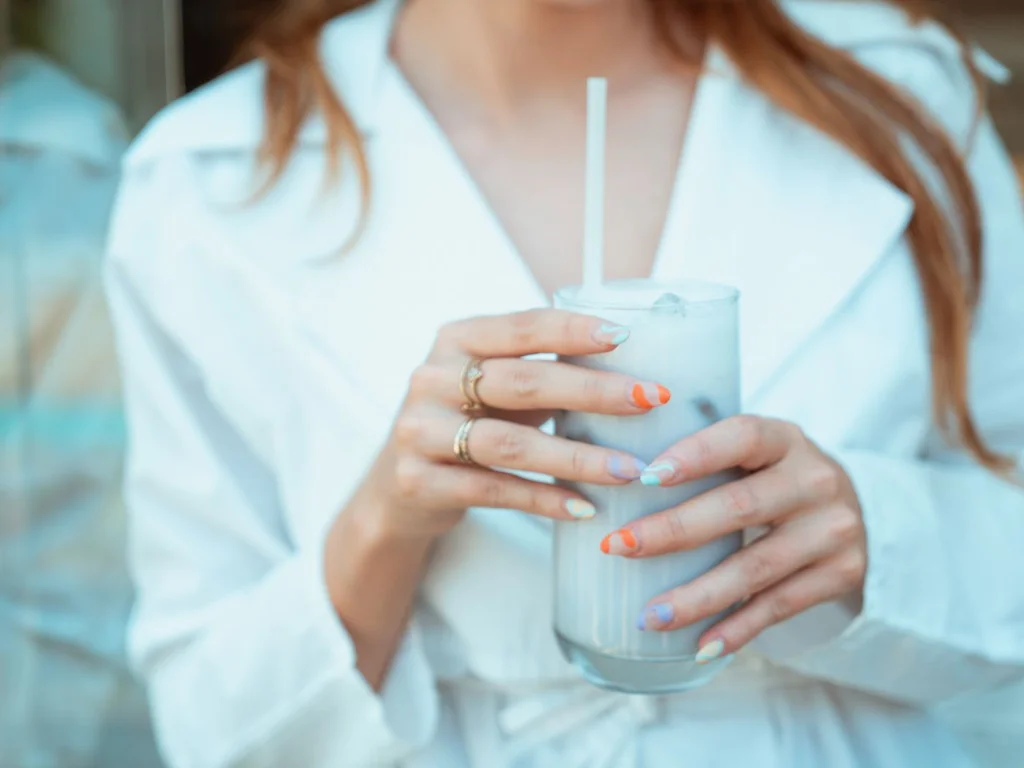
Pastel orange and blue nails holding a glass of iced coffee outdoors — the café set. Two pastels, warm and cool, sharing one hand is jelly’s easiest mix, because the shared translucency blends them into one family even though the hues are opposites. This is also the most “everyday” photograph in the guide: no studio, no occasion, just a good manicure holding a drink. That is jelly’s real selling point — a trend finish that fits an ordinary Tuesday.
Best for: everyday wear, pastel duos and café-photo aesthetics.
Salon tip: when pairing a warm and a cool pastel, put the cool shade on the longer-looking fingers. Blue recedes visually; orange advances — balancing them evens the hands.
16. Sapphire Jelly Set
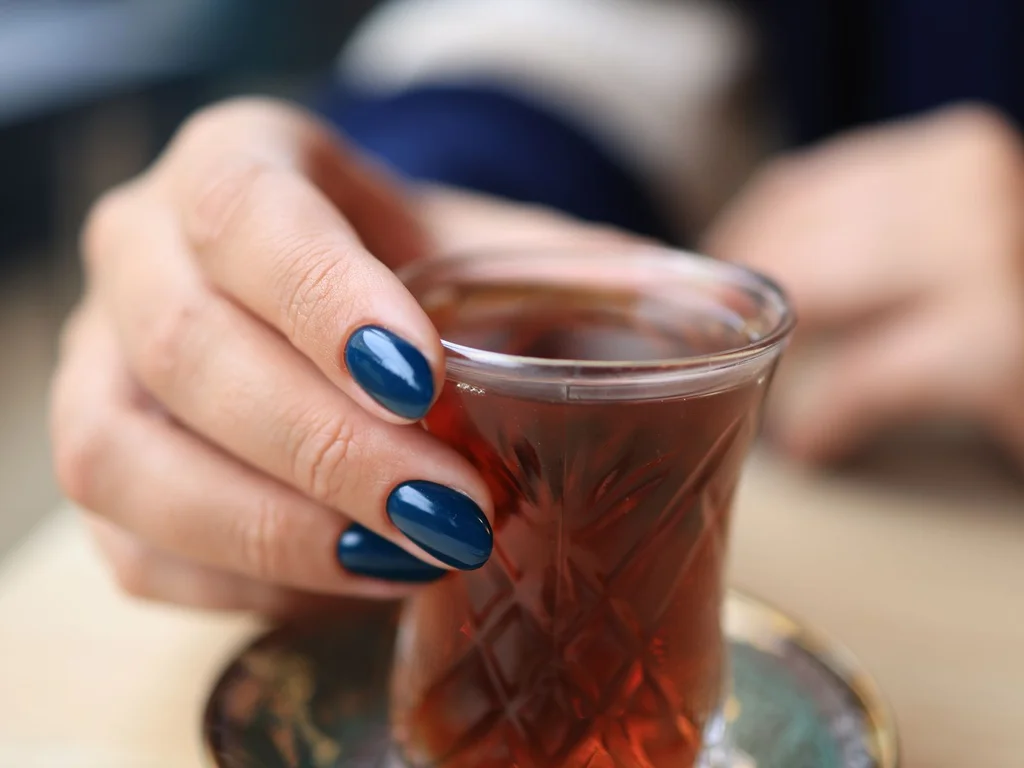
Deep sapphire-blue nails holding a traditional tea glass. Sapphire is the richest blue in jelly form: translucent enough to glow at the edges, saturated enough to read as a jewel. The tea-glass styling makes the point elegantly — glass against glass. Blue jelly has one honest flaw worth knowing before you book: of all the jelly families, deep blues fade the fastest in strong sun and chlorinated water, shifting slightly teal by week three. A UV-protective top coat slows it down.
Best for: jewel-tone evenings, blue devotees and formal colour.
Salon tip: ask for three thin coats rather than two thick ones in sapphire. Deep jelly shades streak more than pale ones, and thin coats are the only cure that works.
17. Lilac Jelly Set
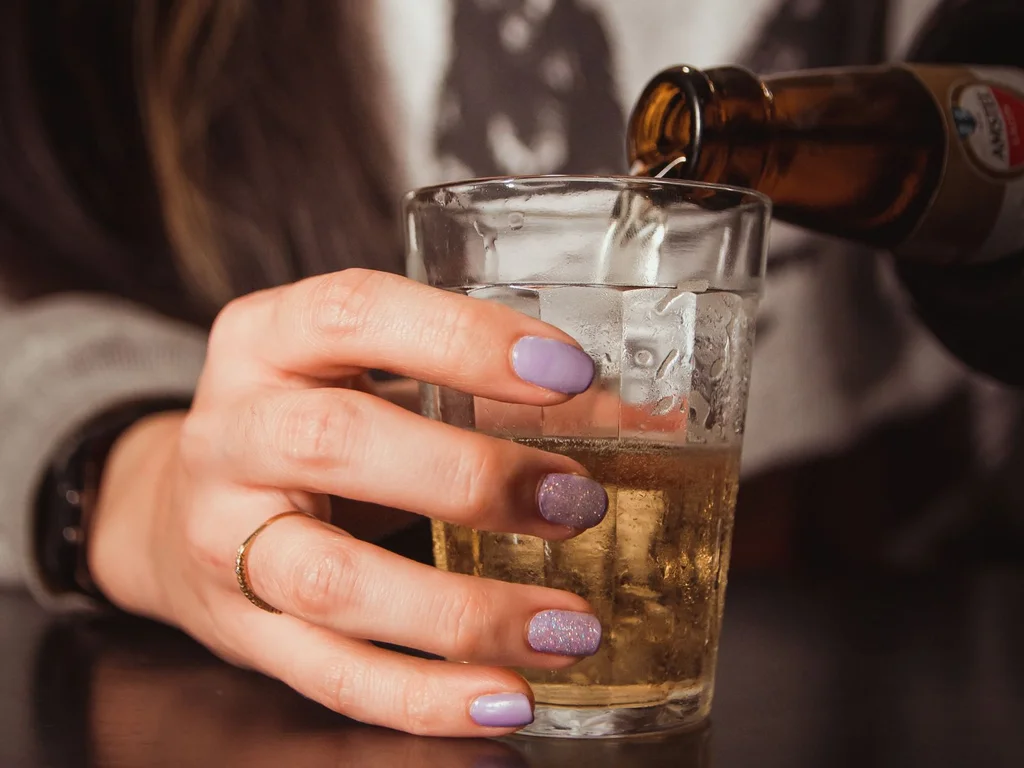
Glossy lilac nails on a hand pouring a drink over ice in a café — design 1’s shade in real life. Where the first photograph was styled and monochrome, this one is documentary: lilac jelly at a café table, in mixed daylight, looking soft and completely wearable. Comparing the two is genuinely useful. If design 1’s lilac felt too pretty to be practical, this is the same colour proving it can hold an iced drink and still look like a manicure worth booking.
Best for: everyday lilac, café days and soft-colour sceptics.
Salon tip: lilac and lavender jellies photograph cooler than they look in person. If you are matching to a photo, show your artist the picture in daylight, not under salon bulbs.
18. Clear Jelly Natural Set
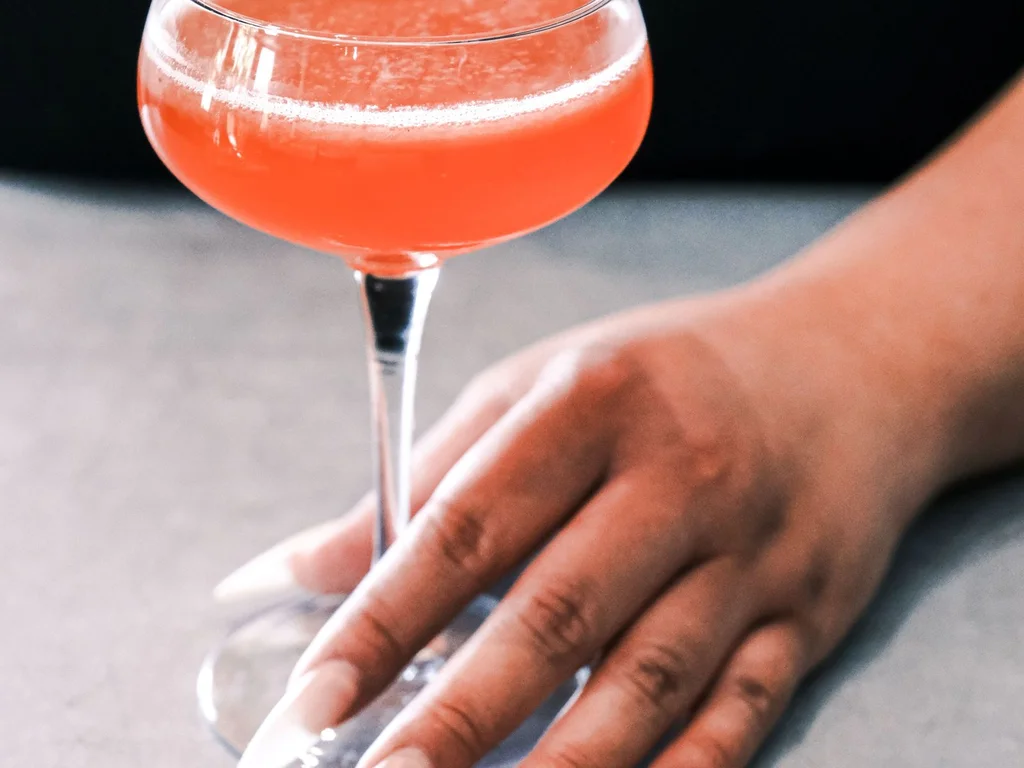
Sheer natural glossy nails resting beside a coral cocktail glass — jelly at zero colour. A clear or barely-tinted jelly set is the finish’s purest form: no pigment to hide behind, just plump, glassy, healthy-looking nails with the natural free edge glowing through. It is the set for people who say they don’t wear colour. It is also the most demanding set in this guide, because with nothing to distract the eye, every ridge, stain and uneven edge of the natural nail is on display. Prep is the design.
Best for: minimalists, nail-health showcases and “no colour” dress codes.
Salon tip: a ridge-filling base under clear jelly is the difference between glass and glass-with-frosting. Ask for it by name — most artists will not assume it.
19. Mint French Jelly Set
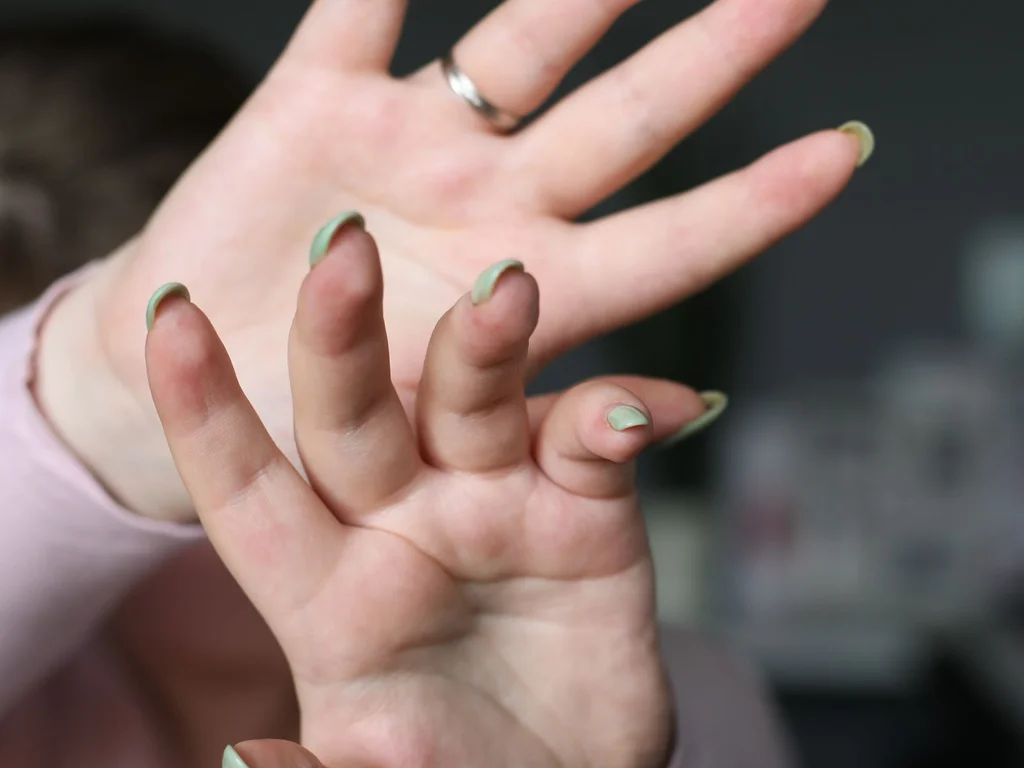
Mint-green French tips on two interlocked hands in soft daylight — the first true French of the list, and it earns the place. The mint tip is itself translucent, so the smile line has a sea-glass softness: defined, but glowing at the edges instead of stamped on. On a natural, barely-tinted base this is the freshest French in the guide, and the interlocked-hands photograph shows why it is booked for couples’ shoots and spring weddings — it looks gentle from every angle, on both hands at once.
Best for: spring sets, couples’ photos and soft-French lovers.
Salon tip: a jelly-coloured tip needs one extra coat versus an opaque tip to read at conversational distance. Build the tip to three coats and keep the base at one or two.
20. Pink Jelly French Tips
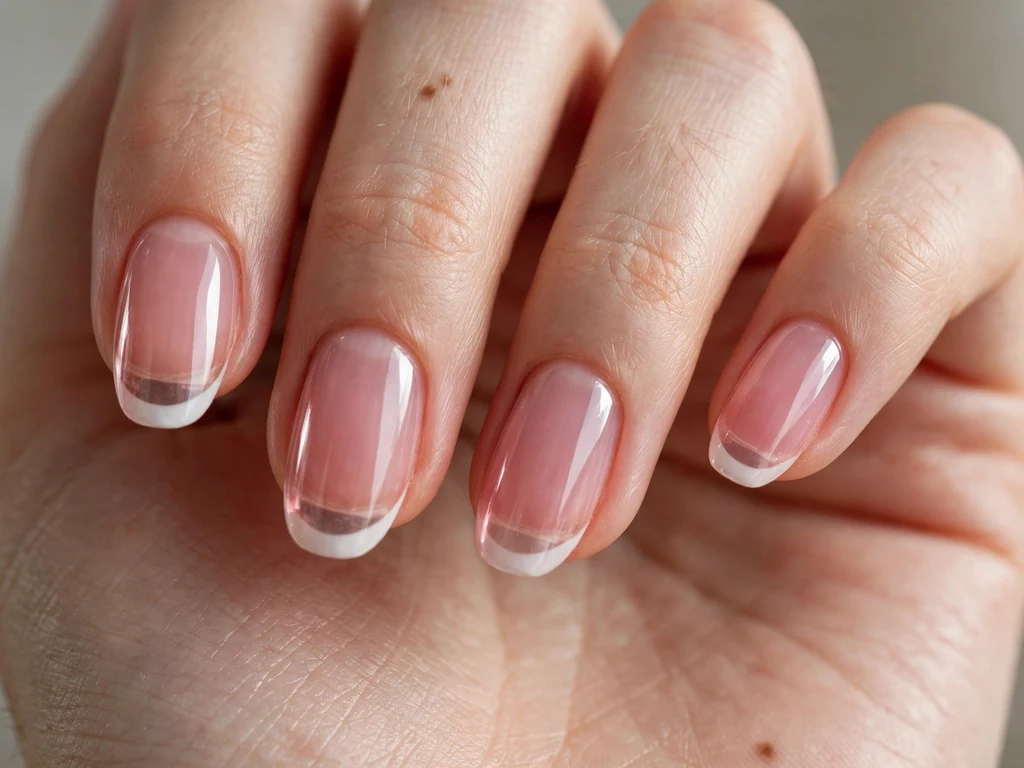
Translucent pink jelly nails finished with clean white French tips — the classic jelly French, and the design this whole guide has been walking toward. The build is the first kind from the explainer: pink jelly over the whole nail, then an opaque white smile line painted on top. The effect is a French manicure with a secret — from across the room it is classic, but up close the pink bed glows like tinted glass instead of sitting flat. If you book one design from this list, book this one; it is the trend and the classic in a single set. Pink’s full family, in every finish, lives in our pink French tip nails collection — this is its glassiest member.
Best for: classic-French lovers trying jelly, bridesmaids, everyday polish.
Salon tip: the white tip must be painted after the jelly base is cured and wiped. Painting opaque white into wet jelly feathers the smile line into the pink.
21. Red Jelly French Tips
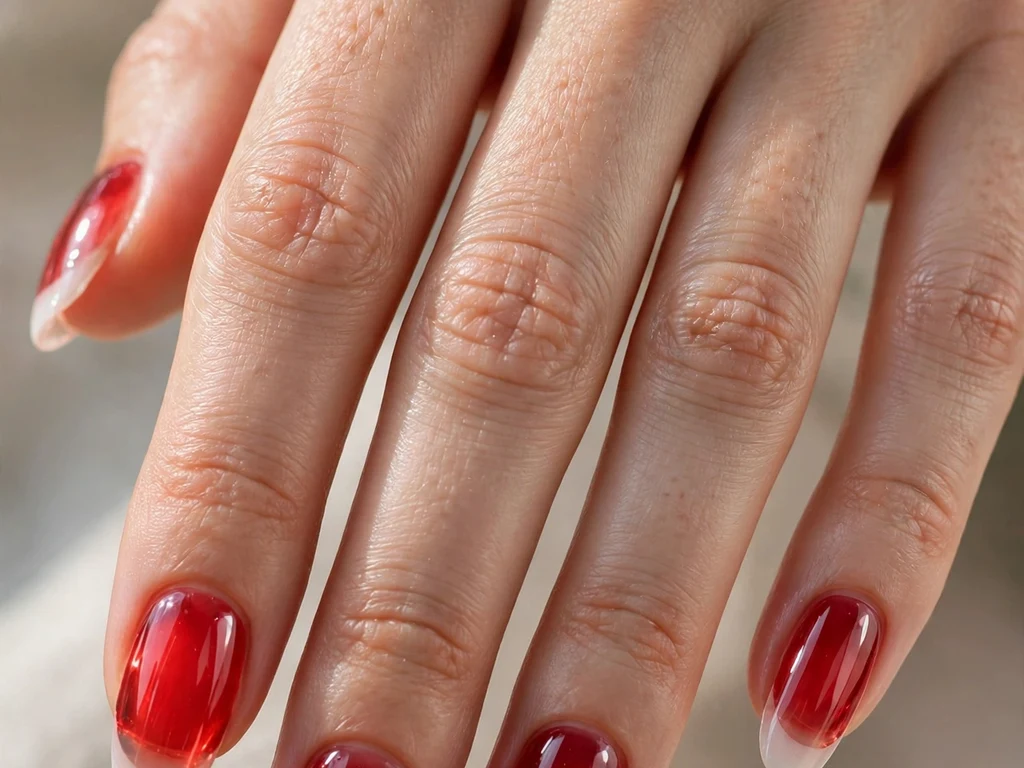
See-through red jelly nails with milky white French tips. Two honest choices meet in this set: the red is fully translucent (design 6’s candy shade), and the tip is milky rather than stark white — a softer edge that suits the see-through base better than a hard graphic line. Together they read like a vintage sweet wrapper: festive without being loud, red without being severe. This is the December-friendly member of the red family that still works in June.
Best for: red lovers who find opaque red heavy, festive-but-soft sets.
Salon tip: milky tips over red jelly need a fully cured base — milk-white gel dragged over tacky red picks up a pink blush. Pretty if intended, a flaw if not.
22. Purple Jelly French Tips
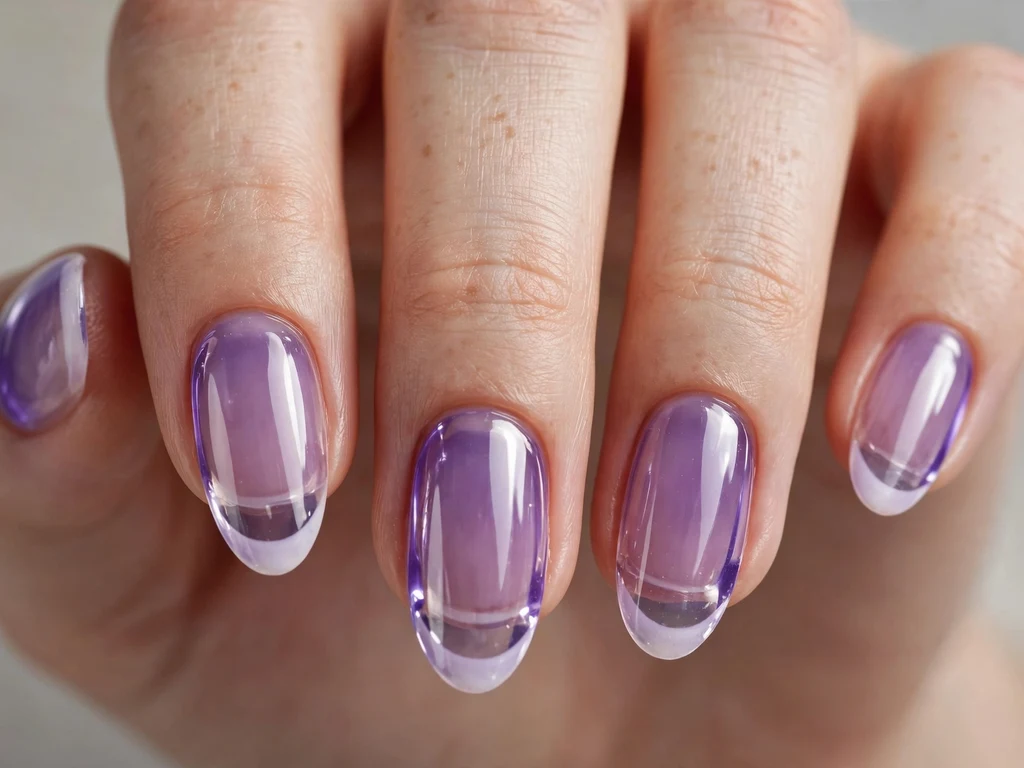
Translucent purple jelly nails with soft white French tips. Purple is the shade where jelly most literally earns its name — this is grape jelly, spooned and shining, with a white edge like the rim of the jar. The soft (not stark) white tip is the right call again: purple jelly is playful, and a hard white line would sober it up. On medium almond nails it stays grown-up enough for evenings while keeping the candy heart of the idea.
Best for: purple fans, playful evenings, grape-everything aesthetics.
Salon tip: purple jellies vary wildly between brands — some lean blue, some lean red. Ask to see the cured colour chip, not the bottle; the bottle always lies about depth.
23. Blue Jelly French Tips
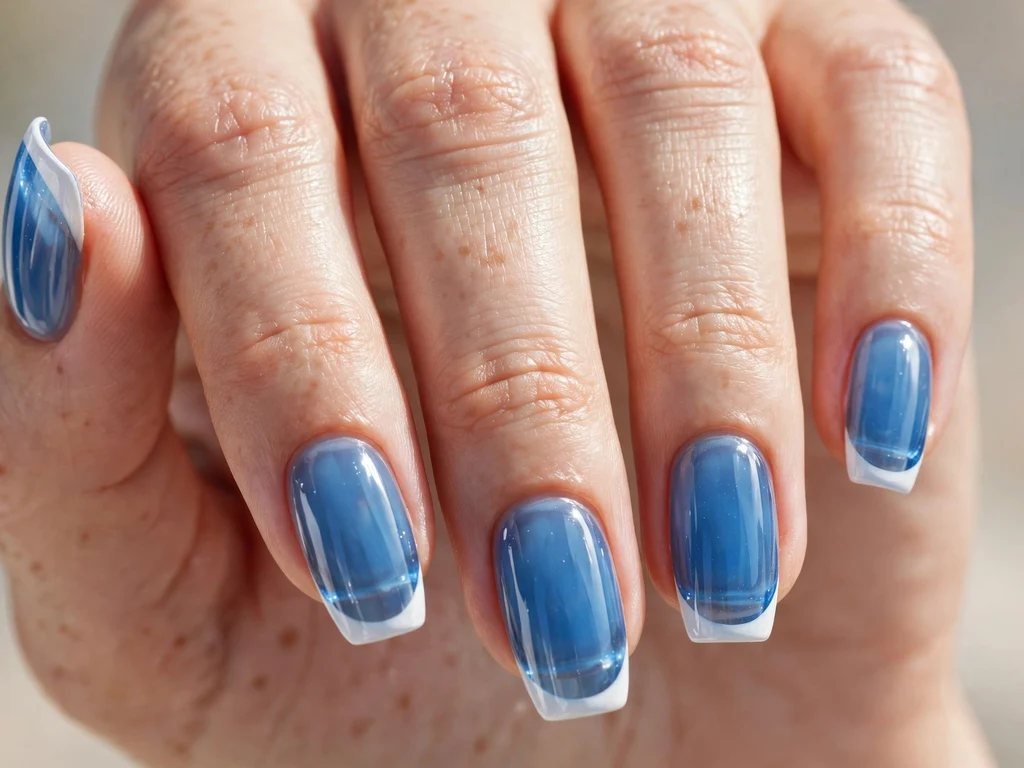
Glass-effect blue jelly nails with crisp white French tips — the boldest French in the set, because here the tip goes back to crisp opaque white against a deep see-through blue. The contrast is the design: the white line reads almost neon-clean against the glowing blue, like light through a bottle. It is design 11’s baby blue grown up and design 16’s sapphire given a French frame — the evening version of both.
Best for: evening sets, blue lovers, high-contrast French fans.
Salon tip: deep blue jelly near the cuticle can make fair skin look cooler and slightly pale. If that is not the goal, keep the jelly to two coats so more natural warmth shows through.
24. Nude Jelly French Tips
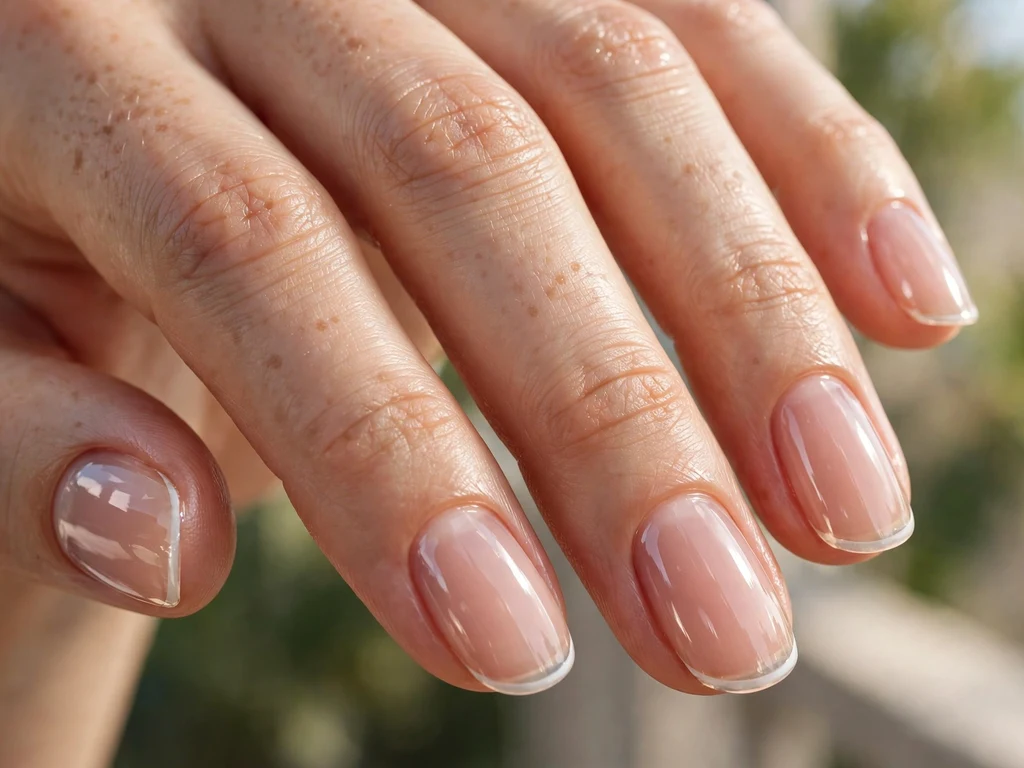
Natural nude jelly nails with fine white French tips — the glass-skin manicure. Nude jelly is the subtlest build in the guide: a tint so close to your own nail colour that the manicure reads as perfect natural nails, polished to a wet shine, with a whisper of white at the edge. It photographs like skincare. The catch echoes design 18: there is nowhere for a flawed nail to hide, and the nude must be matched to your skin — too pink reads doll-like, too beige reads dirty.
Best for: minimal luxury, office and interview wear, bridal parties.
Salon tip: test the nude jelly on one nail in daylight before the set. The right nude disappears into your hand; you should see shine and a white edge, not colour.
25. Rainbow Jelly French Tips
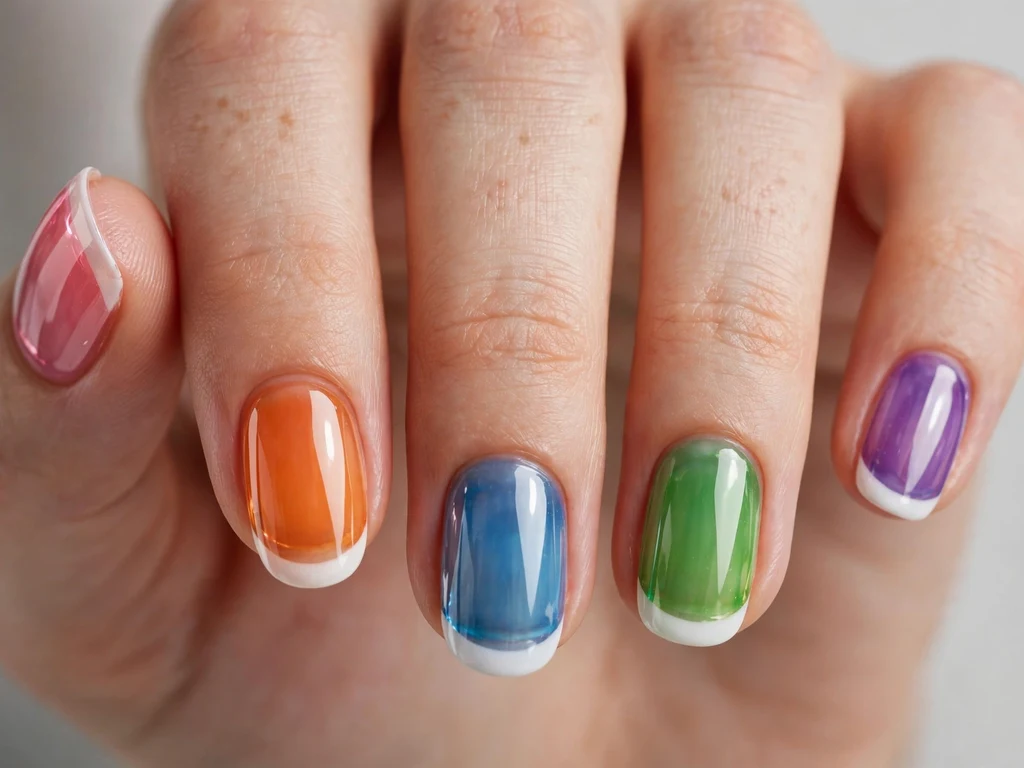
A different translucent jelly colour on every nail, each finished with a white French tip — design 4’s skittle, all grown up into a French. The shared white tips are what make it a design rather than a sample board: ten different glasses, one identical frame. It is the happiest set in the guide and the natural finale — proof that the jelly French is not one look but a system that holds any colour you pour into it.
Best for: celebrations, indecisive colour lovers, summer finales.
Salon tip: keep every colour at exactly two coats, whatever its depth. In a rainbow set, evenness of translucency matters more than evenness of colour — that shared glassiness is the glue.
How to Choose Your Jelly Shade
Jelly flatters almost everyone, because your own nail becomes part of the colour — but the shade family, the coat count and your nail’s condition decide whether the result is glass or a mess. Use this table first, then the key points below it.
| Your style / skin tone | Shades that glow on you | Designs to start with |
|---|---|---|
| Fair, cool undertone | Lilac, baby blue, pink jelly, clear | 1, 11, 20, 18 |
| Fair, warm undertone | Tangerine, pastel orange, nude jelly | 2, 15, 24 |
| Medium / olive | Cherry red, tropical skittles, mint French | 6, 10, 19 |
| Deep skin tones | Sapphire, deep green, cherry, rainbow French | 16, 14, 6, 25 |
| “Colour, but make it quiet” | Clear, nude and sheer natural jellies | 18, 24, 1 |
| Short nails | Mini skittles, swirls, clear jelly | 5, 9, 10, 18 |
| Long nails | Deep sapphire, green, blue French | 16, 14, 23 |
Key points for choosing well:
- Your nail is an ingredient. Unlike any opaque set, a jelly manicure’s final colour is the polish plus your natural nail — its pinkness, its stains, its white free edge. Two people wearing the same bottle will not match exactly. That is the charm, and it is why a one-nail test beats a bottle photo every time.
- Coats are your depth dial. One coat is a tint, two is the classic jelly, three is nearly opaque at the centre with glowing edges. Decide the dial before the set starts, and hold every nail to the same count — uneven coats are the most common jelly flaw.
- Stained or damaged nails: read the honest print. Jelly shows everything. Yellowed, ridged or peeling nails will show through designs 18 and 24 like print through tracing paper. Either choose a deeper shade (6, 14, 16), switch to a milky finish for a round, or give the nails a care break first — jelly rewards a healthy base like no other finish.
- The anti-jelly exists, and it is fine to prefer it. If see-through colour feels unfinished to you, matte French tip nails are the opposite philosophy: flat, opaque, nothing glowing through. Plenty of people alternate — jelly for summer, matte for winter — and the two finishes frame each other beautifully across a year.
- Length honesty. Jelly depth scales with nail area a little, not a lot: short nails (designs 5, 9, 10) lose almost nothing, because the glow comes from translucency, not surface. What long nails add is drama in the deep shades — sapphire and blue French (16, 23) genuinely need the canvas.
How to Make Jelly Nails Last — and the Staining Talk
A jelly set wears like the product underneath it — gel jelly typically lasts two to three weeks, regular-polish jelly about five to seven days — but the finish has three care rules of its own:
Key points for wear:
- Gloss is the finish — protect it. Jelly’s whole effect lives in the glassy top coat. A thin glossy refresh every four to five days keeps the see-through depth looking wet; once the surface dulls, a jelly set does not look worn, it looks wrong, like cloudy plastic. This is the single highest-value habit in this section.
- Light colours stain — honestly. Pale jellies (1, 18, 24) pick up colour from the world: turmeric and curry, dark denim dye, hair colour, spray tan, even strong tea. The tint sits in the top coat more than the nail, so a gentle wipe with a polish-safe cleanser or a fresh top-coat layer fixes most of it — but a curry-night with a brand-new clear jelly set is a known heartbreak. Deep shades barely show staining at all.
- Yellowing is usually the sun, not the polish. Clear and pale jellies can yellow slightly after heavy UV exposure (sunbeds worst, beach weeks next). A UV-protective top coat slows it; designs worn mostly indoors rarely see it. If a pale set yellows, it is the top layer — a file-and-refresh at a fill restores the glass.
- Base coat is your nail’s raincoat. Red, orange and blue jellies (2, 6, 16) can leave a temporary tint on the natural plate after removal. With a proper base coat, that tint is on the coat, not on you. Skip the base and you may wear the ghost of your cherry set for a week.
- Grow-out is jelly’s gift. Because the colour at the cuticle is translucent, the regrowth line is the softest of any finish in this series — a jelly French at week three looks “sheer near the base” rather than “overdue”. It is one honest reason the trend survives busy lives.
Removal:
- Gel jelly soaks off like gel — because it is gel. File the gloss, wrap in acetone pads for 10 to 15 minutes, push the softened layers away gently. Jelly layers are thin, so they usually release faster than an opaque gel set; anything that resists gets more soaking, never more force.
- Regular-polish jelly is the easy exit. Standard remover takes it off in minutes — one of the real arguments for learning the finish in lacquer first (design 18’s clear set is a perfect practice run).
- Never peel a jelly gel set. Thin translucent layers tempt peeling because they flex — and take the nail’s top layer with them in see-through sheets you can watch happening. Soak, always.
- After removal, judge the nail honestly. If the plate looks thin or bendy, give it a week of oil and a strengthening coat before the next jelly round. Jelly shows the nail you have; keeping that nail healthy is the whole maintenance plan.
Frequently Asked Questions
What are jelly nails?
Jelly nails are a manicure made with translucent, tinted polish or gel — colour you can see through, so the natural nail glows beneath it like light through stained glass or hard candy. The finish comes from Korea, where it is called syrup nails after the thick, self-levelling syrup gels used to build it: one coat is a faint tint, two or three coats deepen the colour while keeping the see-through depth. Sealed under a glossy top coat, the result looks plump, wet and glassy — colour with dimension instead of flat colour.
What is the difference between jelly nails and syrup nails?
Almost none — they are two names for one finish, divided by geography and product. “Syrup nails” is the Korean term, tied to syrup gels: thicker, highly translucent polishes made to be layered. “Jelly nails” is the Western name for the same look, often achieved with jelly gel polishes or by mixing a few drops of strong colour into clear top coat. If a salon looks blank at “jelly”, ask for “syrup” (or “sheer layered gel”) — you will usually be describing the same manicure.
Can you do a French tip with jelly nails?
Yes — in two ways, both shown at the end of this guide’s list. The classic build paints an opaque white smile line over a translucent jelly base, so the tip stays crisp while the nail bed glows with tinted depth (designs 20–25). The softer build makes the tip itself jelly — a see-through coloured edge over a natural or milky base, like coloured glass (design 19). The first reads as a French manicure with a secret; the second reads as stained glass. Both cure and wear like any gel set.
How long do jelly nails last?
As long as the product carrying them. A gel jelly set typically lasts two to three weeks, the same as a standard gel manicure, and the translucent colour itself does not fade — what fades is the gloss, which a thin top-coat refresh every few days restores. A regular-polish jelly set lasts about five to seven days. Jelly also grows out more gracefully than opaque colour, because the sheer base hides the regrowth line, so a set often looks acceptable for several days past its best.
Do jelly nails stain or turn yellow?
They can, in two honest ways. First, pale and clear jellies pick up surface stains — turmeric, denim dye, hair colour, spray tan — mostly in the top coat, so a refresh usually fixes it, and deep shades hide it almost completely. Second, clear and pale sets can yellow slightly after heavy sun or sunbed exposure; a UV-protective top coat slows it down. Underneath, strong shades (red, orange, blue) can leave a temporary tint on the natural nail itself — a proper base coat prevents it, which is why no design in this guide should ever be worn without one.
Final Thoughts
Jelly nails are colour with the lights left on. Every other finish in this series decides what your nail looks like; jelly shares the job with the nail itself — its warmth, its glow, its free edge shining through the tint like the pale heart of a piece of candy. That partnership is why the finish flatters so many hands, and why it asks for healthy nails and honest prep in return.
If you are new to it, start where the guide starts: a lilac or pink jelly, two coats, full gloss. Live with the glow for one set. Then decide whether your French goes the classic way — white line over tinted glass, design 20 — or the stained-glass way, design 19. Either way, save the photo, show your artist, and agree on the coat count before the first layer goes on. With jelly, the number of coats is the design.
More Questions About Jelly Nails
Can jelly nails work on short nails?
Yes. The mini multicolour set (design 5), lime swirl (9), tropical skittle (10) and clear jelly (18) are all made for short nails. Keep the coats thin, cap the free edge with the jelly colour itself, and the glow shows even on a short nail.
Do jelly nails work for a wedding?
Yes. Nude jelly French (design 24), pink jelly French (20) or clear jelly (18) are the safest picks. Keep the colour sheer, the tips clean and the gloss high, and the set reads as soft and bridal, not loud.
What is the best jelly shade for a first set?
Lilac (designs 1 and 17) or pink jelly French (20). Two coats give the classic jelly depth, the colour is forgiving if a coat is uneven, and the glow shows with very little effort.

Pingback: 25 Dreamy Glazed Donut Nails Design Ideas to Try